
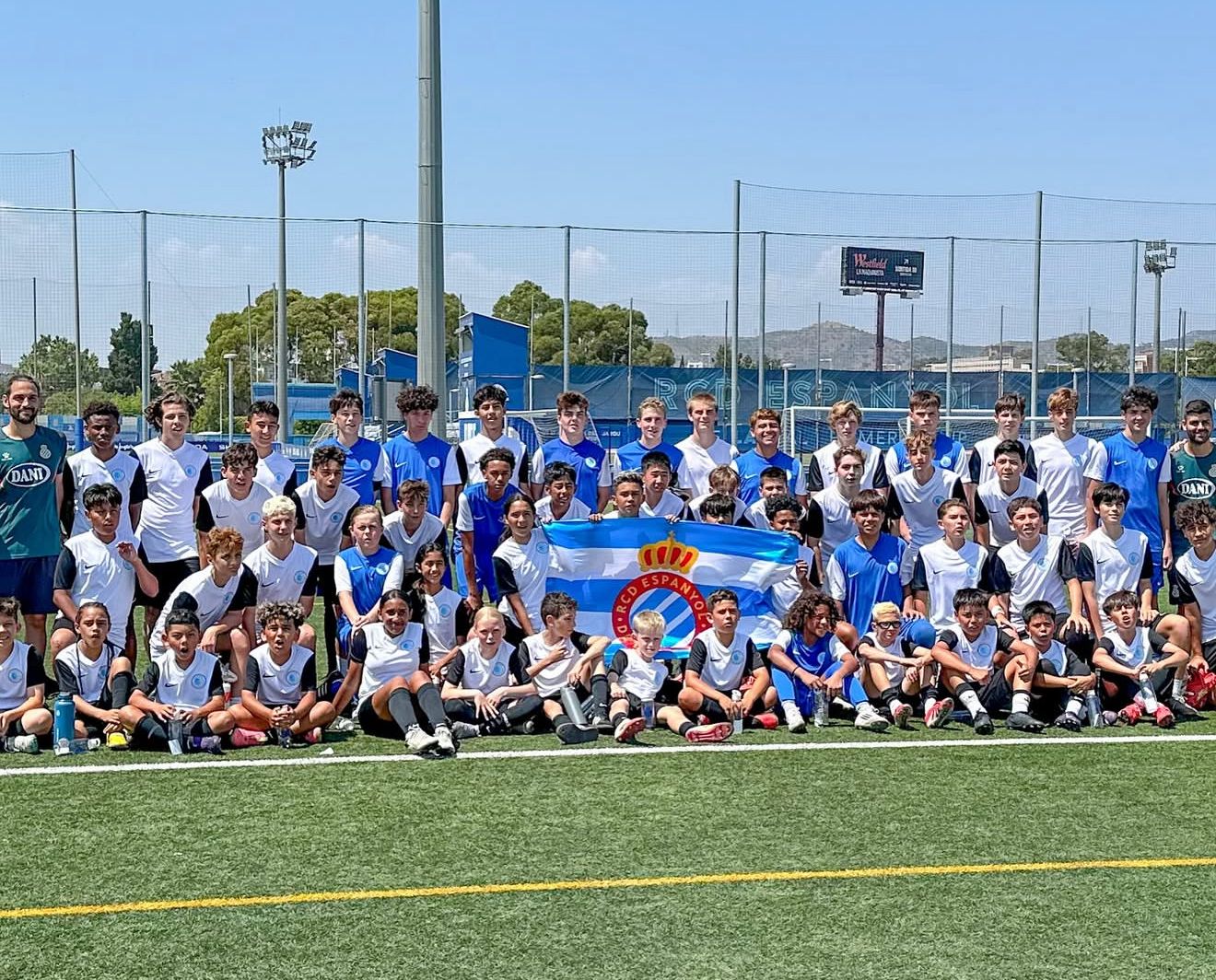
Development doesn’t happen by accident. It happens in real competition, against opponents who push you, in environments that demand more than your local league ever will.
For players at the International Development Academy (IDA), that competitive environment is built directly into the program. From Spain to England to international tournaments across Europe, IDA players don’t just train at a high level. They compete consistently, against meaningful opposition, in front of the people who matter.
Here’s a closer look at what the international league soccer experience actually looks like inside IDA’s global academy structure.
Training builds the player. Competition reveals them.
The gap between a strong training environment and a strong competitive environment is one of the most overlooked factors in player development. A player can look exceptional in practice and struggle the moment the opposition is organized, physical, and tactically sharp. The only way to close that gap is to compete regularly and against opponents who expose it.
IDA’s model is built around this reality. Across its campuses in Spain and the UK, players are placed into competitive structures that mirror professional academy standards, not recreational leagues, not friendly-heavy schedules. Real international soccer league competition that tests players week in, week out.

At IDA Valencia, the competitive calendar is designed to expose players to a range of opposition at every level of development.
Throughout the season, IDA Spain players compete against:
The opposition varies by time of season and player development stage, ensuring that players are constantly challenged at the appropriate level while also being pushed beyond their comfort zone at key moments. No two match weeks look the same, and that variability is intentional.
Training volume is a minimum of 12 hours per week on the field, with the competitive schedule built around that foundation, so players arrive at matches physically prepared, tactically organized, and mentally ready to perform.
Beyond the regular competitive calendar, IDA Spain players also compete in high-profile international tournaments that bring additional exposure and elevated competition. Events like the Hudl Wyscout International Cup have placed IDA players on the same field as some of the top professional academy systems in Europe.
Learn more about IDA Valencia: internationalda.com/valencia/
For players who want to combine elite football with an internationally recognized degree, the IDA UK University pathway at the University of Hertfordshire offers a competitive structure that goes well beyond typical university sport.
Located just 20 minutes from Central London, the program places student-athletes in a professional academy training environment while competing in BUCS (British Universities and Colleges Sport) university leagues — the UK’s national competition structure for higher education, spanning over 500 men’s and women’s football teams across 100 leagues nationwide.

The competitive calendar is built to mirror the demands of the professional game:
What makes
this structure particularly valuable for development is the combination of consistent training load and structured league competition. Players aren’t just logging fitness sessions between occasional matches. They’re operating within a professional rhythm — train, compete, analyze, improve — over the course of a full academic year.
For U.S. players, the BUCS environment also provides exposure to a style and intensity of football that domestic university programs simply don’t offer. The competition is organized, physical, and tactically demanding in ways that translate directly to college recruitment and professional development conversations back home.
And uniquely, players on this pathway graduate with more than football experience. They earn a globally recognized undergraduate degree — with most UK programs completing in three years — while building a professional football CV at the same time. No NCAA amateurism restrictions apply, and the University of Hertfordshire accepts U.S. Federal Loans.
Learn more about the IDA UK University pathway: https://internationalda.com/uk-university/
One of the most valuable aspects of soccer international competition at IDA’s level is who’s watching.
When IDA players compete in high-level fixtures and tournaments, they’re doing so in environments that attract attention — from U.S. college coaches actively recruiting internationally, from professional club scouts evaluating players across European academy competitions, and from IDA’s own recruitment network that connects players to the next opportunity on their pathway.
This exposure is intentional, not accidental. IDA builds its competitive calendar with visibility in mind:
The result is a competitive experience where development and exposure happen at the same time — not separately.
Learn more about the IDA Pro & College Combine: internationalda.com/pro-combine/
Competing internationally isn’t just a resume line. It’s a development experience in itself.
IDA players don’t spend their season in one location. Fixtures, tournaments, and competitive opportunities take them across Europe — competing in different countries, against different footballing cultures, in environments that demand adaptability as much as technical ability.
That adaptability and the ability to perform in an unfamiliar setting, against opponents with a completely different style of play, and on a short preparation timeline, is one of the most transferable qualities a player can develop. It’s what separates players who can perform in controlled environments from players who can perform anywhere.
College coaches notice it. Professional scouts look for it. And IDA’s competitive model is specifically designed to build it.

IDA’s competition structure doesn’t exist in isolation. It’s one part of a development model that connects daily training, competitive fixtures, academic progression, and pathway support into a single, coherent experience.
Players aren’t just placed into a schedule and left to figure it out. They receive:
Every match is a data point. Every tournament is an opportunity. And every season at IDA is structured to make the most of both.
Explore IDA’s full academy structure: internationalda.com/academies/
IDA’s competitive model is designed for players who are serious about where they’re going.
If you’re looking for a comfortable environment where results don’t matter and opposition is manageable, IDA isn’t the right fit. But if you’re ready to be tested, to compete against professional academy opposition, to perform in front of scouts and college coaches, to travel internationally and prove yourself in environments that are genuinely demanding, IDA is built for exactly that.
The players who get the most out of the program are the ones who show up ready to compete, ready to learn from the competition, and ready to use every match as a step toward the next level.
If that’s you, the conversation starts here.
Connect with IDA and explore your pathway: internationalda.com/academies/
Still have questions? Want to learn more? Fill out the form below to connect with an IDA representative. We look forward to hearing from you!