
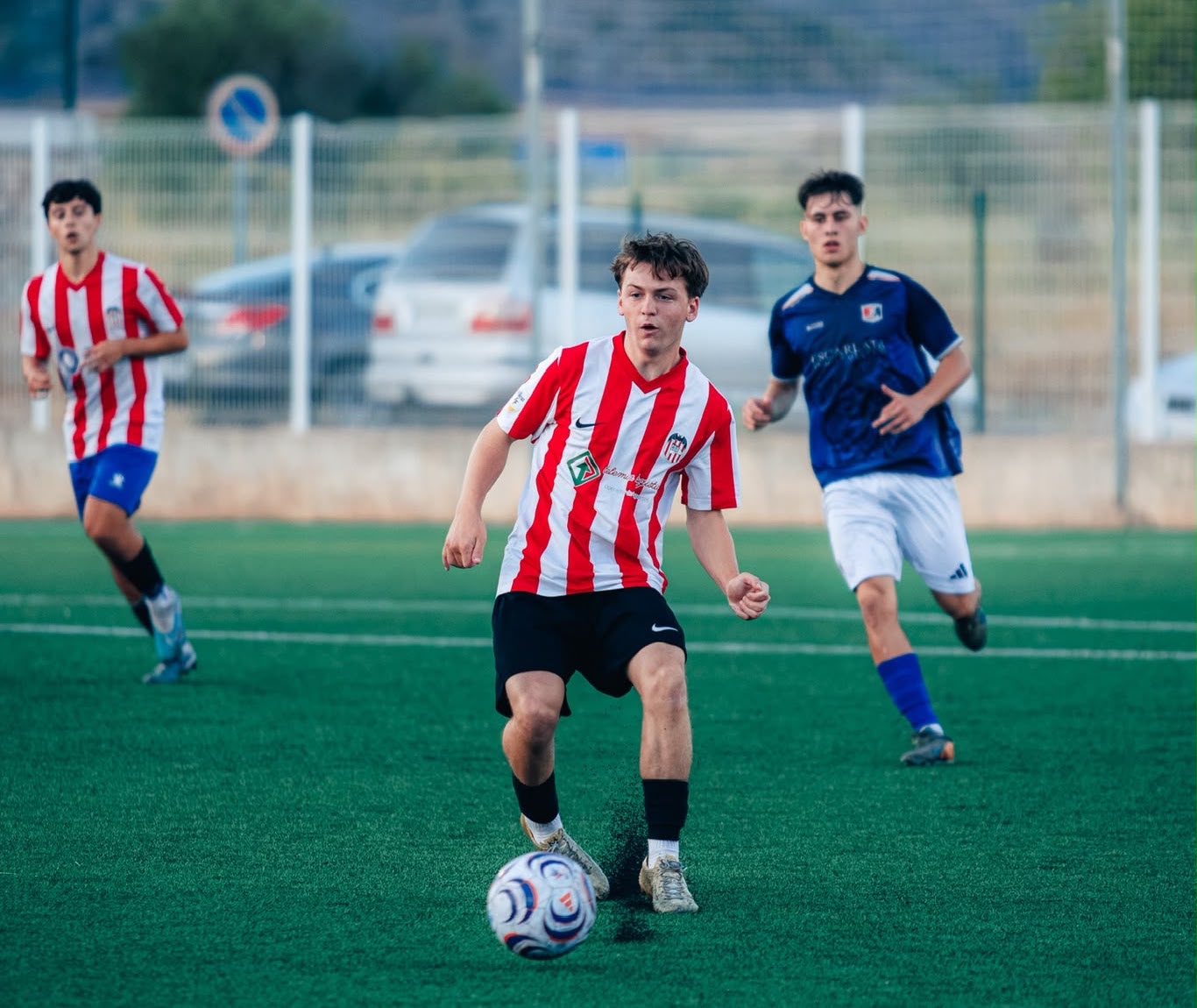
Sebastien Blanchet’s original plan in Spain lasted two weeks.
At 18, the Canadian right back can now look back on nearly three years connected to IDA Valencia, a progression through its U19 environment, and a move into Spanish club football with CD Acero.
The turning point wasn’t an immediate breakthrough or a single standout performance. It was realizing, during that first short stay, how much room he still had to grow.
“I wanted to try and become a better player, so I thought I would try IDA out for two weeks,” Sebastien recalls. “Those two weeks showed me that I still had lots to improve and that the level here in Spain was much better than in Canada.”
Instead of discouraging him, that realization changed the plan.
“We thought it’d be best for my future as a footballer to go back to IDA for longer to improve.”
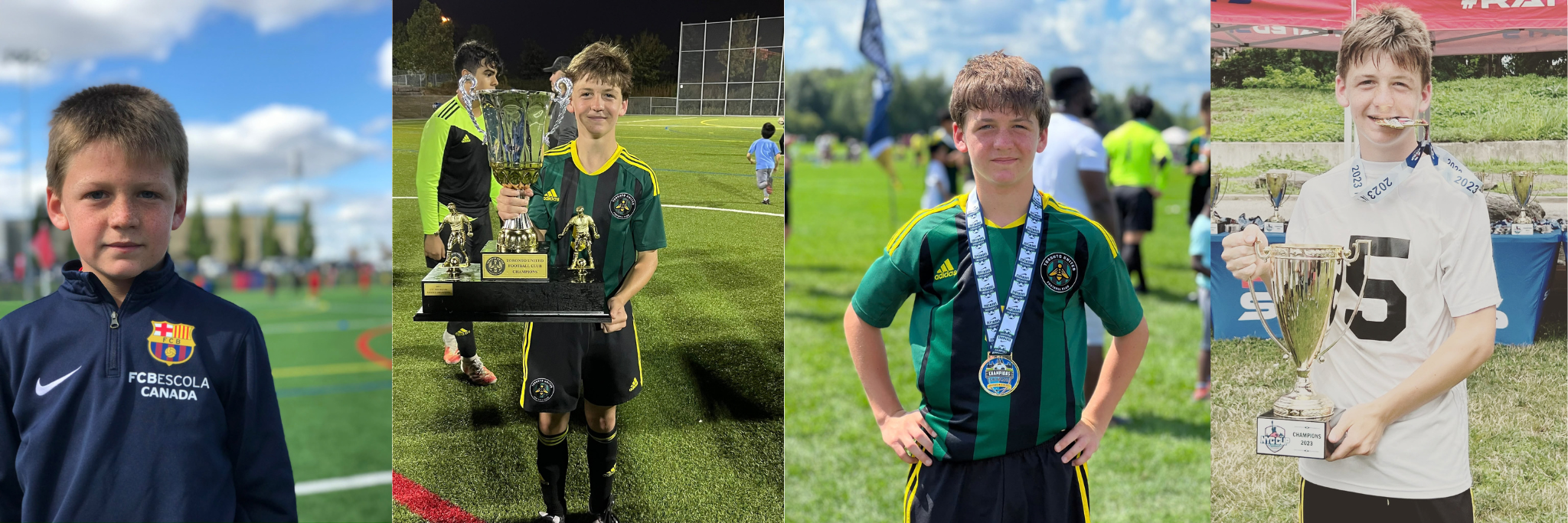
Originally from Uxbridge, Ontario, Sebastien had been playing football since he was around five years old. After trying “every sport possible,” football became the one he stuck with, eventually taking him through several clubs in Canada.
An affiliation between his club and IDA opened the door to his first experience in Spain. What was initially a two-week opportunity soon became a much bigger decision.
For Sebastien’s father, Mario, the first trip was also a test of something beyond football: how his son would handle being away from his family and navigating life in another country.
“I saw it as an opportunity for him to develop his soccer skills and grow his confidence both on the field and socially,” he says.
When the possibility of returning came up, there wasn’t much convincing required.
“When I asked Sebastien if he’d like to go to IDA first for a half year and then for a full year, he didn’t hesitate for one second to say yes. That for me was a sign that he was committed.”
Staying meant accepting the gap Sebastien had identified during those first two weeks and working to close it.
Through different stages of IDA’s U19 environment, he trained consistently, competed against Spanish opposition, developed physically, and became increasingly familiar with the rhythm and demands of football in Spain.
Today, the differences he notices aren’t necessarily the most visible ones.
“My understanding of the game has increased, as well as my confidence,” Sebastien says. “I’m also stronger and more coordinated.”
The IDA environment also gave him experience within a structure that, he says, helped make his eventual transition into Spanish club football more familiar.
“I think the teams we play and the ways we train are very much like we’re our own club team, so I think that helped me prepare for what I was getting into.”
His father describes the development as gradual rather than linear.
“He’s had his ups and downs just like any athlete, but he gets right back at it and keeps going,” he says. “The consistency of the workout and practice schedule is one of the big things that’s helped to continually move Sebastien forward.”
That consistency would become important when his next opportunity arrived.
Sebastien initially signed with CD Acero during the second half of last season, although licensing issues meant he was unable to compete.
The opportunity didn’t disappear.
This season, he returned to Acero, with coach Pina wanting him back with the club. For Sebastien, it meant another chance to test the development of the previous seasons in a competitive Spanish club environment.
“The process of joining them was a little difficult just because I’m from a different country, but the people and players at the club made me feel welcome, and overall it’s been a good experience so far.”
The step has also introduced new demands. Sebastien points particularly to the speed of play and the endurance required at Lliga Comunitat level – areas where he believes his preparation at IDA has made the transition easier.
“IDA has helped a lot with their gym sessions, and also being able to play games against a bunch of Spanish teams of different levels has helped me prepare to play.”
But perhaps the clearest measure of his progress isn’t where he’s playing. It’s how different the opportunity feels compared with what he thought was possible when he arrived.
“Signing for a Spanish club meant that I had surpassed any expectations of what I had for myself,” he says. “The me that first arrived here at IDA would’ve never thought that I could be playing at this level, and I have to thank IDA for really helping me develop to be able to play at this level.”
The decision to stay in Spain also required Sebastien to grow outside football.
Nearly three years of living in another country, experiencing a different culture and sharing an environment with players from around the world have changed his perspective in ways he believes will remain relevant regardless of where football takes him.
“I think that I’m more cultured as a person and I understand how more of the world works and lives,” he says. “I think that will help me in the future with whatever I end up doing.”
His father sees that broader development as an important part of what the family gained from choosing IDA.
“Looking back from day one to where we are today has been an incredible journey,” he says. “The coaching staff and guys like Georgios always push him whether he’s in a slump or he’s just cruising along.”
“Regardless of what his next steps are, we will forever be grateful for what IDA has done for him both on and off the field.”
Sebastien doesn’t have the next three years mapped out.
For now, his focus at CD Acero is much more immediate: earn consistent minutes, perform when given the opportunity, and see where the season takes him.
“I honestly don’t know what the next step is in terms of my longer-term ambitions,” he admits. “It really depends on what happens this season.”
There’s something fitting about that uncertainty.
His entire journey in Spain started with two weeks and no guarantee of what would come after them. Those two weeks became months, the months became seasons, and the player who arrived wanting to find out how much he needed to improve is now testing that development within Spanish club football.
If Sebastien could go back and tell that younger version of himself one thing, it wouldn’t be where he’d eventually end up.
It would be to believe that he could get there.
“Always be confident and believe in what you can do, because at times I didn’t believe in myself. The most important part is to always believe in yourself and in your dreams.”
Still have questions? Want to learn more? Fill out the form below to connect with an IDA representative. We look forward to hearing from you!