
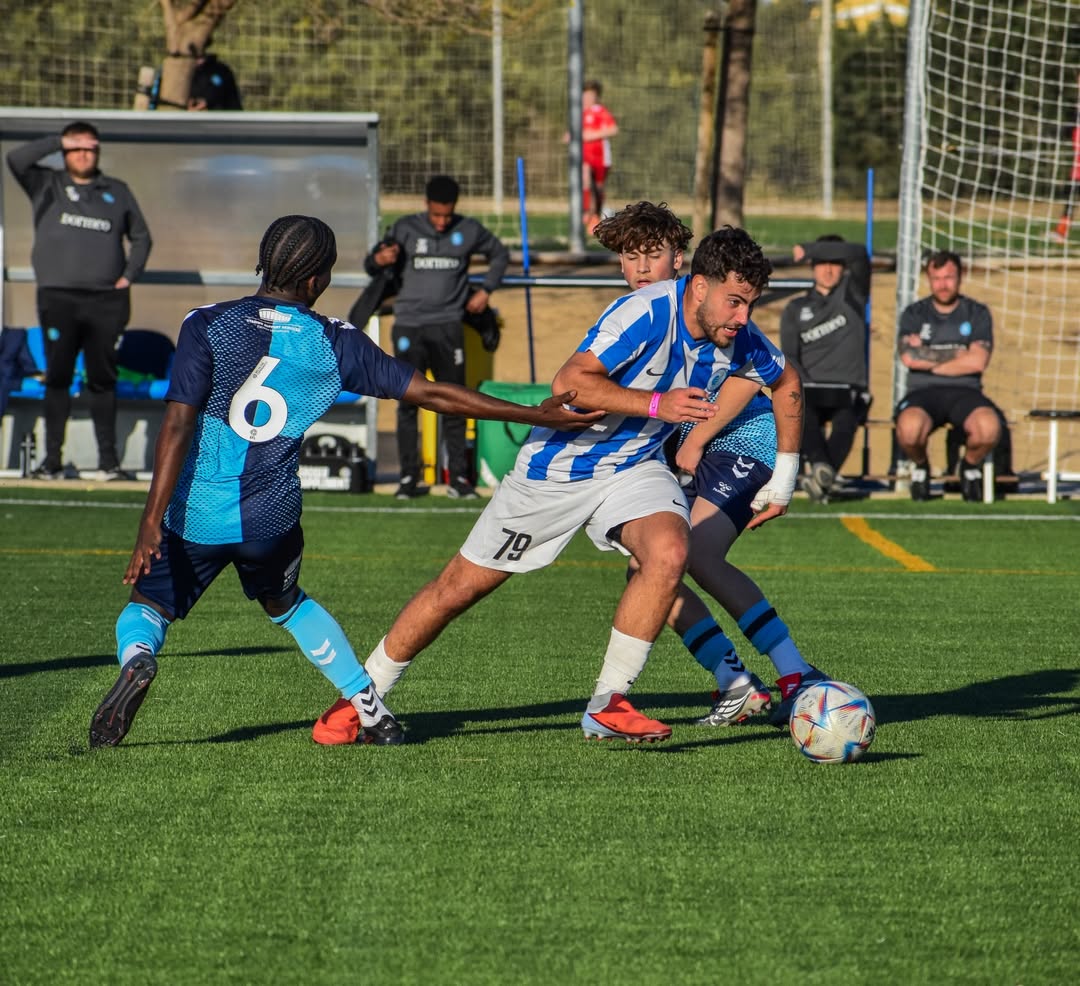
International Development Academy is set to take a significant step forward this Easter, traveling to MICFootball 2026 with seven teams across multiple age groups—marking one of the most complete representations of the academy on a global stage.
With U16 Navy, U16 Royal, U18 Navy, U18 Royal, U18 White, U19 Navy, and U19 White all competing, IDA’s presence goes beyond participation. It reflects the growth, structure, and ambition of a project designed to develop players within a unified identity.
“For us, it represents a very important step as an academy,” said Academy Director Vicente Bosch Tebar. “It’s not just about participating, but about competing with seven teams across different age groups. Being present with so many players allows us to experience the tournament as a unified club, where everyone shares the same identity.”
MICFootball has built a reputation as one of the most competitive youth tournaments in the world, bringing together elite academies, professional club structures, and international teams in a high-intensity environment.
For IDA, this is exactly where development accelerates.
“It is essential,” Vicente explained. “These types of tournaments push players to their limits—not only technically and tactically, but also mentally. It’s where you can truly measure your level against some of the best academies in the world.”
In a format where teams face different opponents in quick succession, players are exposed to varying styles of play, rhythms, and levels of intensity—forcing constant adaptation.
“Players are exposed to different styles, rhythms, and levels of intensity in a short period of time,” Vicente added. “This accelerates their learning process, as they are constantly required to adapt and make decisions under pressure.”
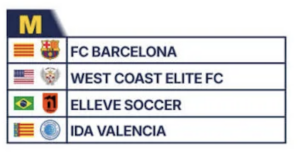
At the center of IDA’s participation is the U16 Navy group, drawn into a standout group featuring FC Barcelona, a Brazilian side, and top American opposition.
For Head Coach Luis Manuel Muñoz Galaso, this is exactly the type of challenge the group has been preparing for.
“Our first reaction to the group was very positive—we see it as a great challenge,” he said. “Facing teams like FC Barcelona, a Brazilian side, and a top American team is exactly the kind of competition we’re looking for.”
The sequence of matches adds another layer to the test.
Starting against Brazilian opposition, the team expects a game defined by creativity and individual quality. The second match, against FC Barcelona, will demand tactical discipline, concentration, and speed of play. The final group match against American opposition is likely to bring a different physical and competitive dynamic.
“Each opponent will demand different solutions,” Luisma explained. “We’re working on adaptability and reading the game effectively. Adaptability will be crucial—we want our players to adjust quickly and respond well to different game scenarios.”
The matchup against FC Barcelona stands out—not only for its prestige, but for what it represents in the players’ development journey.
“When facing teams like FC Barcelona, the key is learning,” Luisma said. “We want our players to understand the level required, especially in terms of speed of play, positioning, and decision-making.”
For IDA, these moments are not just about results, but about exposure to the highest standards of the game.
“Facing top academies such as FC Barcelona creates an environment that is much closer to professional football,” Vicente noted. “This is where players begin to understand what the next level truly demands.”
Competing in a tournament like MIC requires more than preparation—it demands adaptability.
With teams from different countries and football cultures, the ability to read the game and adjust quickly becomes a decisive factor.
“In this type of competition, there is no margin for error,” Vicente said. “Players must quickly understand what each game demands and adjust accordingly. Adaptability often makes the difference.”
At the same time, IDA remains committed to maintaining its identity.
“We believe in maintaining our identity, but also adapting certain aspects depending on the opponent,” Luisma added. “It’s about finding the right balance between staying true to our principles and being competitive.”
While the level of competition is high, both staff and players approach the tournament with a broader perspective on success.
“Performance is important, but it never comes before development,” Vicente explained. “We want players to compete to win, but always understanding that every match is an opportunity to learn.”
For the coaching staff, the objective is clear: growth, maturity, and a deeper understanding of the game.
“Beyond results, we want the players to gain confidence, maturity, and a deeper understanding of the game,” Luisma said. “These are the kinds of experiences that help shape their future.”
As IDA prepares to compete across seven teams, MICFootball represents more than just a tournament—it is a reflection of the academy’s pathway in action.
“Success is not only measured by results,” Vicente concluded. “For us, it means seeing our players compete with personality, adapt to different situations, and show growth throughout the tournament.”
With a clear identity, a growing presence, and players ready to test themselves at the highest level, IDA enters MICFootball with ambition—and with purpose.
“Enjoy the experience, but understand where you are,” Luisma said. “Compete with courage, personality, and ambition—because these are the environments that truly shape a player’s development.”
Still have questions? Want to learn more? Fill out the form below to connect with an IDA representative. We look forward to hearing from you!