
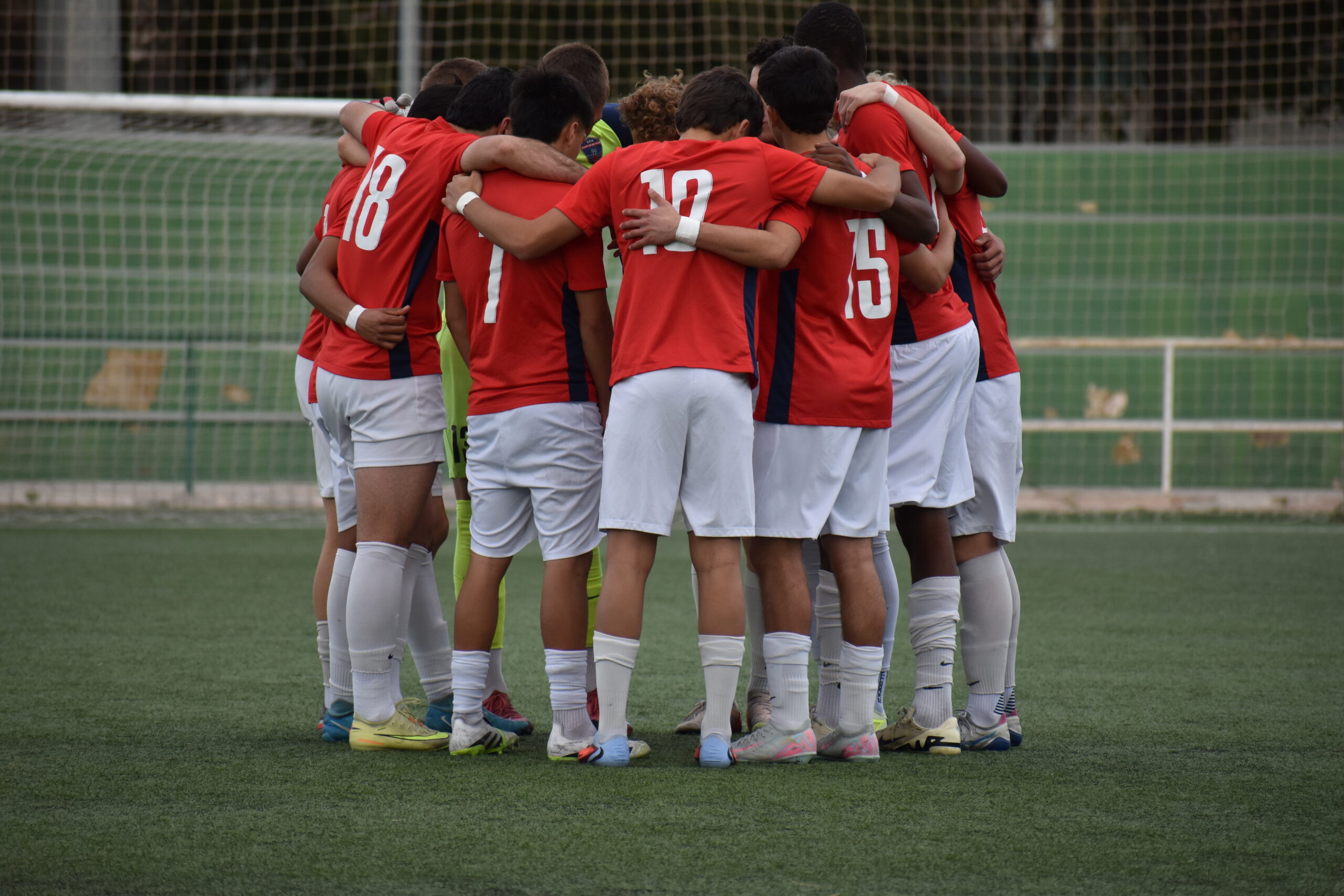
For the right athlete, Europe isn’t just a destination. It’s a development environment unlike anything available at home.
Every year, high school-aged players from the United States and around the world make the decision to pursue their athletic and academic goals abroad. They’re drawn to the structure, the competition level, and the opportunity to be fully immersed in the game they love, while still earning a quality education.
Soccer boarding schools in Europe have become a serious pathway for serious players. And for families evaluating options for fall 2026 placement, understanding what these programs actually offer, and how to evaluate them, is the critical first step.
A soccer boarding school is more than a training camp. It’s a full residential program where student-athletes live, train, study, and compete in an integrated environment, often for an entire academic year or longer.
Unlike summer camps or short-term experiences, boarding programs are built around long-term development. Players aren’t visitors. They’re members of a community that pushes them daily—on the pitch, in the classroom, and in life.
At their best, these programs offer:
The result is a development experience that simply can’t be replicated at home—no matter how good the local club or high school program is.
Europe remains the global center of football development. The academy systems in Spain, England, Italy, and beyond have produced generations of professional players, and the methods, the competition, and the culture reflect that.
For American players in particular, training in Europe offers exposure to a style of play and level of tactical sophistication that accelerates development in ways that domestic environments often can’t match. Daily training alongside and against players from different footballing cultures sharpens adaptability, technical precision, and football IQ.
Beyond the pitch, there’s a maturity factor. Living and studying abroad at 15, 16, or 17 builds independence, resilience, and communication skills—exactly the qualities that college coaches and professional scouts look for when evaluating recruits.
For families considering international soccer schools, the question isn’t whether Europe is a valuable environment. It’s about finding the right program within it.
One of the most important factors when evaluating any soccer boarding school is how seriously the program treats academics—not as an afterthought, but as a true priority alongside athletic development.
For high school-aged athletes, this matters for practical reasons:
The best international football academies build academics into the structure of every day—not squeezed in around training, but genuinely integrated so that athletes can excel in both areas simultaneously.
This means flexible scheduling that accommodates match days and travel, academic support and tutoring built into the program, and pathways that allow students to continue coursework that satisfies their home institution requirements or builds toward NCAA eligibility.
For families planning fall 2026 placement, verifying academic accreditation and NCAA compliance should be among the first questions asked of any program.
The International Development Academy (IDA) is one of the leading international football academies operating across Europe, with established campuses in Spain, the UK, Italy, and beyond.
For high school-aged athletes, IDA’s model is built specifically around the dual demands of elite athletic development and quality academic progression.
IDA partners with accredited institutions to offer flexible academic solutions for student-athletes. At the Valencia campus, this includes a partnership with TPH Academy and Mas Camarena School—one of Spain’s top international schools—delivering an NCAA-compliant online curriculum paired with in-person support. Students have access to over 120 course options including AP, Honors, and foreign language courses, as well as ACT/SAT preparation.
In the UK, IDA partners with Kings InterHigh, a leading online school that allows athletes to continue their studies on a schedule that accommodates the demands of full-time training and competition.
The result is an academic experience that doesn’t ask players to choose between education and development—it delivers both.
Explore IDA’s academic programs: internationalda.com/ida-academic-offering/high-school/
On the pitch, IDA players train daily under licensed coaches in professional environments. The program is built around:
IDA’s European campuses place players in the heart of elite football culture—training alongside players who are competing to reach the same levels, in environments that mirror what professional academies demand.
Learn more about IDA’s academy locations: internationalda.com/academies/
Not all soccer boarding schools in Europe are built the same. For families evaluating options for fall 2026, here are the key criteria to assess:
Accredited academics. Confirm that the program’s academic partner is accredited and that coursework is NCAA-compliant if a U.S. college pathway is the goal.
Coaching credentials. Look for licensed coaches with professional or high-level club backgrounds, not just former players with no formal qualifications.
Competitive calendar. A quality program should offer consistent competitive fixtures against meaningful opposition—not just internal scrimmages.
Residential structure. The living environment matters. Look for programs with structured daily routines, pastoral support, and a community that takes player wellbeing seriously.
Clear pathway outcomes. Ask about where previous players have gone—college placements, professional trials, alumni outcomes. Programs with strong track records should be able to speak to this directly.
For most international students, the window to secure fall 2026 placement is closing — and for those without a European passport, time is especially critical.
Visa processing timelines, enrollment deadlines, and limited program capacity mean that families who haven’t started the process yet are already working against the clock. The placement process for a European soccer boarding school involves an initial inquiry and player evaluation, followed by a review of athletic and academic records — and that process takes time that many families no longer have to spare.
Players who hold a European passport have more flexibility, but spots are still filling. For everyone else, the reality is straightforward: if fall 2026 is the goal, the conversation needs to happen now.
IDA is still accepting inquiries for the 2026/27 season — but availability is limited. Don’t wait for the right moment. This is it.
Get started here: internationalda.com/academies/
Soccer boarding schools in Europe offer a development environment that combines elite athletic training with serious academic support—and for the right athlete, a year or more abroad can be a transformative step toward a college scholarship or professional pathway.
The key is choosing a program that treats both sides of that equation with equal commitment. Not a training camp with classes bolted on. Not a school with a soccer team. A true academy that develops the whole athlete.
IDA has been building those pathways for student-athletes across its international campuses. For families evaluating fall 2026 options, it’s worth learning more about what a full-year immersive experience at a leading international football academy actually looks like.
Explore IDA’s programs and get in touch: internationalda.com/academies/
Still have questions? Want to learn more? Fill out the form below to connect with an IDA representative. We look forward to hearing from you!