
In 2023, just minutes after being diagnosed with leukemia, Everett Shoji looked at his parents and said three simple words:
“I’ve got this.”
At the time, neither Everett nor his family could have known exactly what lay ahead. What followed would be nearly 850 days of treatment, countless hospital visits, daily chemotherapy, physical setbacks, and challenges that would test even the strongest of individuals.
But from the very beginning, Everett’s focus never changed.
He wanted to get back on the pitch.
A Goal Worth Fighting For
For Everett, football has always been more than a game.
The Oregon native has spent the last five years developing as a goalkeeper, embracing the responsibility that comes with being the final line of defense.
“Goalkeeping allows me to have my team’s trust and to be the last line of defense if all goes wrong,” Everett explains. “It challenges me as an individual both physically and mentally through the good and the bad moments.”
When leukemia interrupted his football journey, the sport became something even more important: a goal.
“Football played a very large role in my recovery,” he says. “It gave me a very important goal to work towards, getting back to the pitch.”
That goal would carry him through some of the most difficult moments of his life.
The Road Back
According to his father, Jeff, Everett’s treatment plan lasted two and a half years.
Over that time, the family endured more than 150 hospital visits, 45 inpatient nights, 20 spinal taps, countless blood transfusions, and daily chemotherapy treatments.
The physical toll was immense.
At one point, Everett had to relearn how to walk and rebuild motor function and strength from the ground up.
“We had to do pool therapy for almost six months before we could get back to the pitch to even begin very basic training,” Jeff recalls.
But even when progress came slowly, Everett never lost sight of where he wanted to be.
Following months of rehabilitation, he trained four to five times per week to regain his strength and confidence. His first match back lasted just five minutes.
It was enough.
From there, he continued building. He earned a place on his high school varsity team and recently achieved another significant milestone: selection to a U19 MLS NEXT squad.
For Jeff, what stands out most is not a single moment, but the consistency of Everett’s determination.
“He never lost focus, always pushing to get back onto the pitch,” he says. “His mental fortitude is unlike anything we have seen.”
A Dream Takes Shape
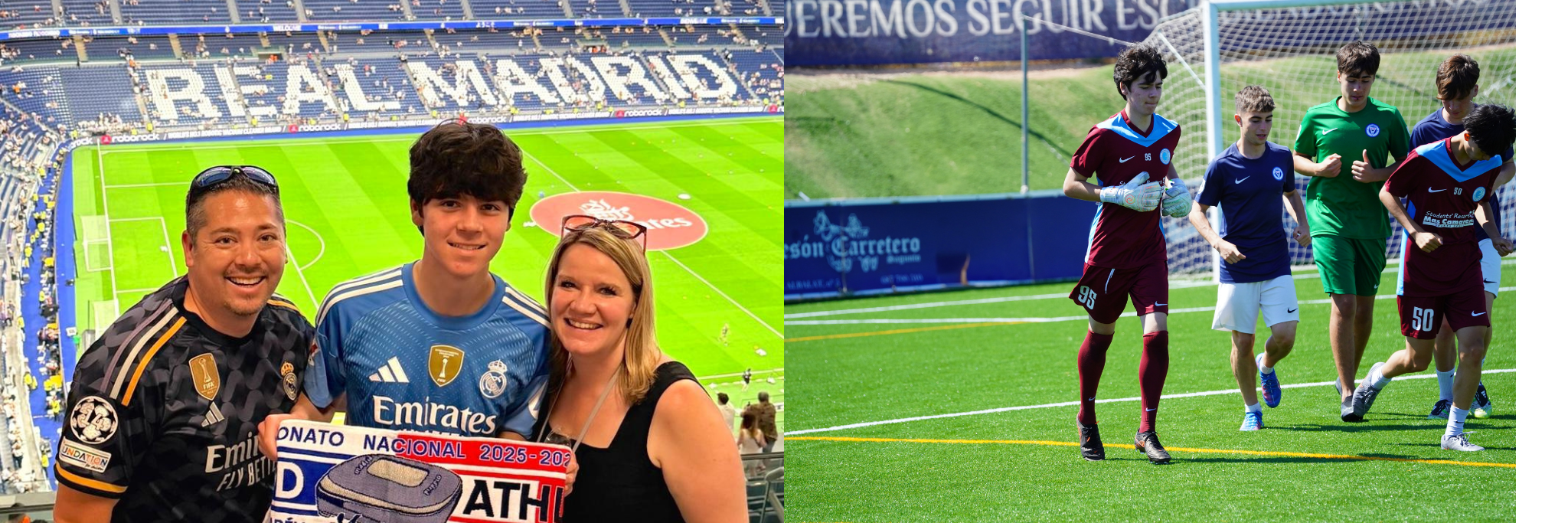
In January 2026, Everett reached a milestone his family had been waiting years to celebrate: his final infusion treatment.
Shortly afterwards, another dream was about to become reality.
Through Make-A-Wish, Everett’s family planned a trip to Spain to watch Real Madrid, one of the world’s most iconic football clubs.
What Everett didn’t know was that another surprise was waiting for him.
Months earlier, Jeff had reached out through the Surf network looking for opportunities for Everett to experience football in Spain. That connection led him to IDA Valencia CEO Jordi Gómez, who worked closely with the family to create an experience that would allow Everett to train, learn, and immerse himself in Spanish football culture.
Everett had no idea.
“I realized that my dream of playing in Spain would become a reality when we got out of the Uber and I saw IDA Valencia’s sign,” he says. “It was an amazing surprise from my parents.”
Finding His Place in Spain
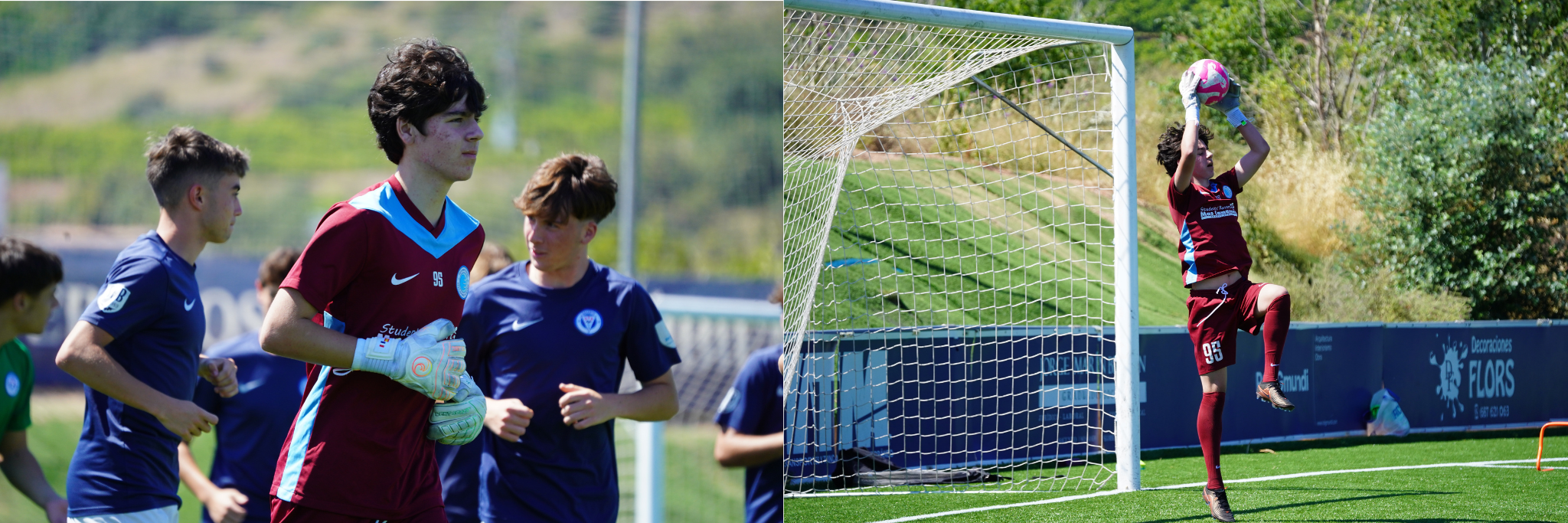
Although he arrived excited, Everett admits he was also nervous.
“At first it felt slightly uncomfortable,” he says. “I was nervous about the language barrier, the expectations, and skill level. We all know Spanish football is the real deal.”
Those nerves didn’t last long.
Over the course of his stay, Everett trained alongside IDA players, worked with coaches, and experienced the demands and intensity of Spanish football firsthand.
“As I realized I fit in well and was able to hold my own, it quickly became comfortable and it started to feel like I was playing at home.”
One of the highlights of the experience came through training sessions with former LaLiga player Luis Pascual, who provided technical guidance and insights that Everett could take back with him to continue his development.
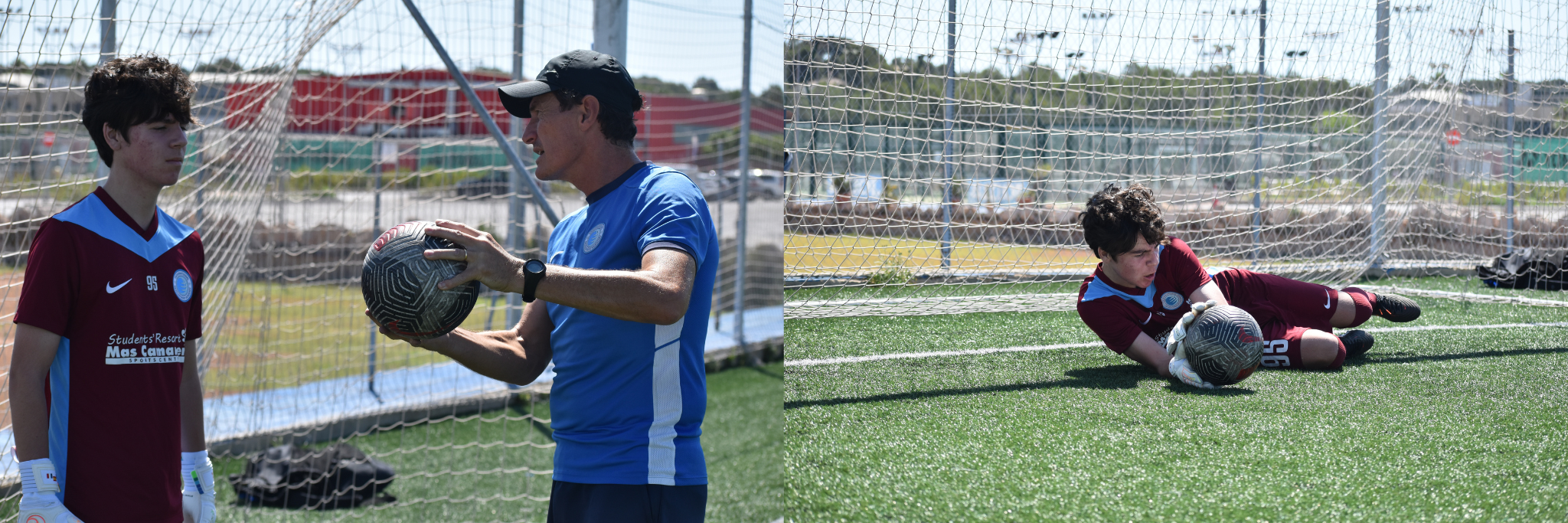
For Jeff, however, the most memorable moments came during training matches.
Before sessions began, players naturally assessed the visiting goalkeeper from Oregon.
Then Everett started making saves.
“We watched Everett have some beautiful stops, winning most of the scrimmages he played in,” Jeff says. “The players that were evaluating him were celebrating him, with coaches and players applauding his saves.”
For the Shoji family, those moments meant everything.
“These were the moments we came for.”
More Than Football
While the trip provided valuable football development, its impact extended far beyond the game itself.
“Everyone at IDA is now a part of our family,” Jeff says. “The generosity and sincerity from the players, coaches and administrative staff was second to none.”
For Everett, the experience reinforced a lesson he had already learned through his recovery.
“I learned that I am very determined and much stronger mentally than I thought I was before my journey,” he says. “This journey has reinforced my belief that hard work and determination will get you where you want to be.”
That message is one he now shares with other young athletes facing challenges of their own.
“Stay determined and keep a positive attitude,” he says. “There will always be challenges in life, some big, some small. Make a large goal and a lot of small goals needed to achieve that big goal.”
What Comes Next
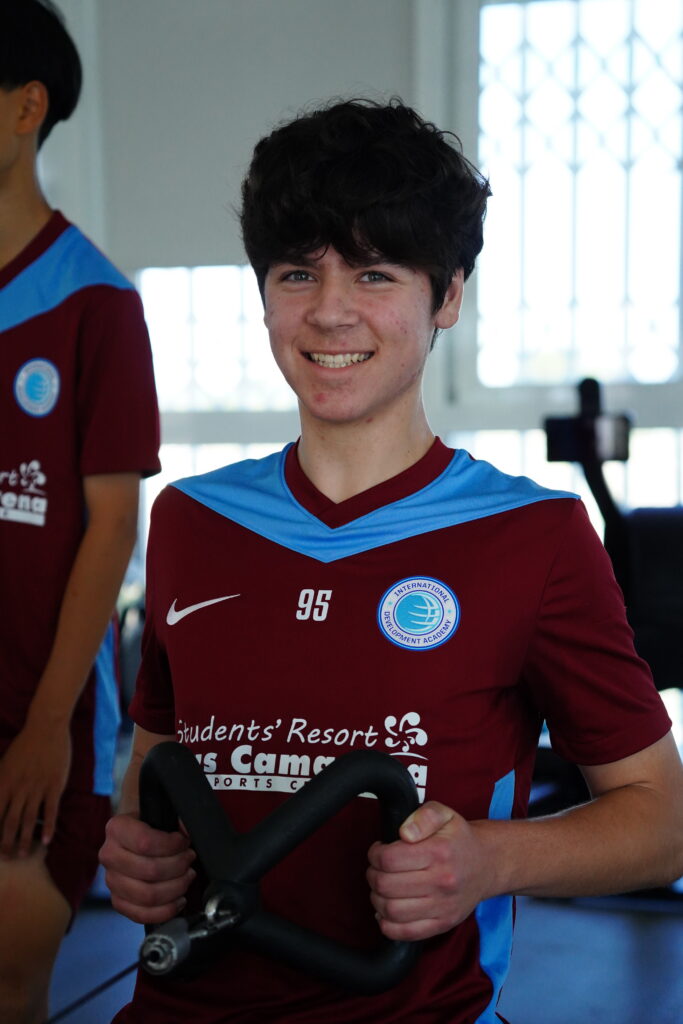
Everett’s story is still being written.
His long-term goal is clear: to play professional football.
Knowing the path he has already traveled, it’s hard to bet against him.
What stands out most is not simply what he has overcome, but the way he has approached every challenge along the way – with humility, gratitude, determination, and an unwavering belief that hard work can open doors.
At IDA Valencia, we were fortunate to witness one chapter of that journey.
A young goalkeeper arrived in Spain hoping to learn, grow, and challenge himself.
He left having inspired everyone around him.
And wherever football takes him next, we’ll be cheering him on.
How IDA Valencia helped Ruben Rosado develop, gain exposure, and commit to Suffolk University.
For many young footballers, the dream is clear.
Compete at the highest level possible. Continue developing. Earn opportunities through the game.
But for Ruben Rosado, that dream required a decision that few players are willing to make.
At just 15 years old, the goalkeeper from Puerto Rico left home and moved across the Atlantic to join International Development Academy (IDA) Valencia in Spain.
Years later, that decision has led him to the next chapter of his journey: a commitment to Suffolk University in Boston, where he will continue his academic and athletic career while receiving full tuition support.
More importantly, it helped shape the person he has become.
A Football Foundation Built in Puerto Rico
Before arriving in Spain, Ruben had already established himself as one of Puerto Rico’s promising young goalkeepers.
Playing for Puerto Rico Surf and representing the Puerto Rico National Team, he developed in a football environment that continues to grow and produce talented players.
“The football environment has grown a lot in Puerto Rico, and it helped me be ready for what awaited me in Spain,” Ruben explained.
Like many ambitious young players, he knew that continuing to challenge himself against stronger competition would be essential to reaching the next level.
When the opportunity to join IDA Valencia presented itself, he saw a pathway that aligned perfectly with his goals.
“When arriving at IDA, my goal was to find a college that was a good fit for me while keeping my level at a high standard.”
Why IDA Valencia?
For international players, choosing the right environment can change everything.
Ruben wasn’t simply looking for a team.
He was looking for exposure, development, and the opportunity to compete against high-level opposition every day.
“I decided to join IDA Valencia to get more exposure and play high-level international competition.”
When he arrived in Spain, one thing stood out immediately.
“My first impressions were that the mentality and training were different. Very professional and organized football.”
That professional environment would soon become his new normal.
Daily training. High expectations. Constant competition.
Exactly the type of environment ambitious players need to continue progressing.
Leaving Home at 15
Moving abroad is never easy.
Moving abroad at 15 is something else entirely.
New country. New culture. New responsibilities.
While many teenagers are still relying on their families for everyday support, Ruben was learning how to manage life independently while balancing football and academics.
“I moved when I was 15 to Valencia. This helped me mature way faster as I had to take care of myself and my space while also maintaining a student-athlete lifestyle.”
That personal growth is one of the defining aspects of the IDA experience.
Players are challenged every day – not only on the field, but in the way they manage their time, handle responsibility, and prepare for life beyond football.
For Ruben, those lessons would prove just as valuable as anything learned during training.
Developing as a Goalkeeper in Spain
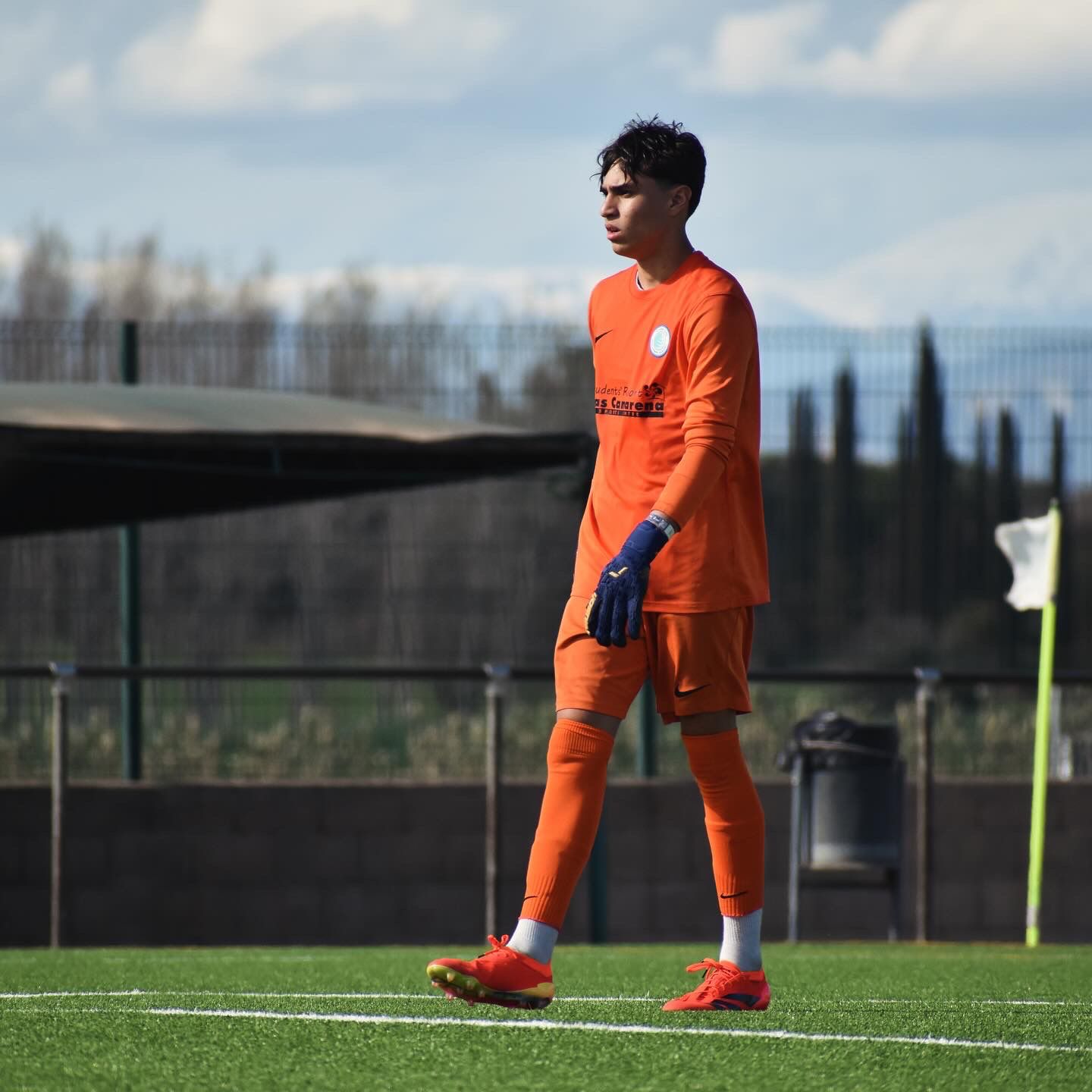
Valencia is known around the world for producing technically gifted footballers.
For goalkeepers, that means the standard is exceptionally high.
“The biggest challenge I faced was staying at the high technical level many goalkeepers have in Valencia.”
Fortunately, Ruben found himself in an environment built to help players continue improving every day.
One of the biggest influences on his development came through his daily goalkeeper training sessions with Luis Pascual.
“Everyday goalkeeper training with Luis Pascual kept me technically at a high level, while also getting great mental advice from my coaches and psychologists.”
For goalkeepers, development is often about much more than shot-stopping.
Decision-making. Positioning. Confidence. Mental resilience. Consistency.
The combination of elite coaching and daily competition allowed Ruben to continue raising his standards while preparing for the demands of college soccer.
Turning a Goal Into Reality
Unlike many players, Ruben always believed college soccer was a realistic pathway.
But as his time at IDA progressed, that vision became clearer.
“The opportunity has always been real for me, but beginning this season was when I knew it’s what I wanted to do.”
The recruitment process required initiative and persistence.
Rather than waiting for opportunities to arrive, Ruben took an active role in creating them.
“I sent out many emails to different coaches and managed to receive interest and offers from several schools. From there I just chose the right fit for me.”
That combination of preparation, exposure, and personal initiative ultimately led him to Suffolk University.
The opportunity included a roster spot and full tuition support – an achievement that reflects years of hard work and commitment.
Why Suffolk University?
For Ruben, choosing a university wasn’t simply about soccer.
It was about finding the right environment academically, athletically, and personally.
“I chose this school because I thought it was the best opportunity to grow in an environment I enjoyed.”
Located in downtown Boston, Suffolk University offered exactly what he was looking for.
A strong Business School.
A competitive NCAA environment.
And a program where he believes he can continue developing.
“I love the Business School in the Downtown Boston area and the team competes in one of the most competitive divisions in all of NCAA DIII.”
Now, his focus shifts to the next challenge.
“I am super excited to get to work, compete for the CNE title, and make an NCAA Tournament appearance.”
More Than a College Commitment
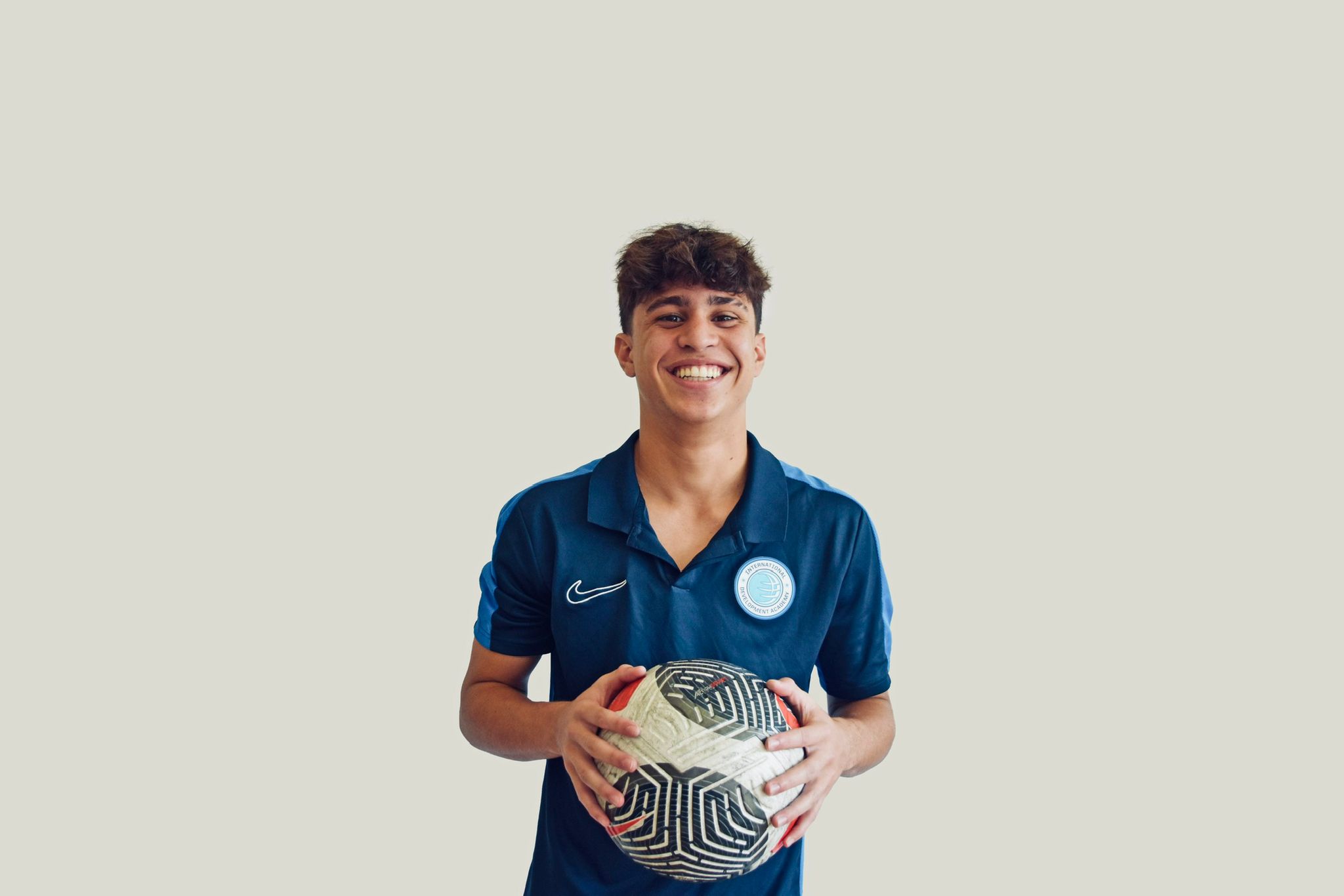
Ruben’s story isn’t simply about earning a place on a college roster.
It’s about transformation.
A young goalkeeper left Puerto Rico at 15 years old in pursuit of something bigger.
Years later, he leaves IDA Valencia not only as a college athlete, but as a more mature, independent, and confident young man.
When asked to reflect on his journey, his answer perfectly captures the impact the experience has had on his life.
“I think IDA has been the most important part of my life. I have been completely shaped by this experience as I have lived here most of my adolescence. IDA has created who I am.”
For players considering a similar path, his advice is simple.
“I would tell players to come to IDA if they think they have what it takes to make it to the next level. IDA worries about its players and they are always willing to provide opportunities for those that work hard.”
At IDA, stories like Ruben’s are exactly why the pathway exists.
To help ambitious players step outside their comfort zones, develop in elite environments, gain international exposure, and pursue opportunities that can change their future.
From Puerto Rico to Valencia.
From Valencia to Boston.
Ruben Rosado’s journey is proof that when talent meets the right environment, incredible opportunities can follow.
Applications remain open for IDA Residency Programs for the 2026/27 season, helping ambitious players from around the world develop their game, gain exposure, and pursue pathways to college soccer, professional football, and international education.
Your story could be next. Register now.
Every summer, thousands of ambitious soccer players attend College ID Camps hoping to improve their game and gain exposure to coaches.
And while those camps can play an important role in the recruiting process, many players and families are beginning to ask a bigger question:
What if summer was about development first?
For players serious about long-term growth, development often matters just as much – if not more – than visibility.
That’s why more families are exploring alternatives like IDA Summer Programs, where the focus extends beyond short-term evaluation and into real player development, international immersion, and personal growth.
Rather than simply attending another showcase event, players at IDA experience what it’s like to train, compete, and live within high-level football environments in destinations like Spain, Brazil, the UK, and Florida.
Because while exposure matters, real opportunities often come from becoming a better player first – and a more complete person as well.
The Difference Between Evaluation and Development
Traditional College ID Camps are primarily built around evaluation.
Players typically attend for a day or weekend, train in front of coaches, compete in showcase-style sessions, and attempt to stand out among large groups of players.
These experiences can certainly help players gain visibility. However, the structure of most ID Camps naturally limits how much actual development can happen in such a short period of time.
Many traditional College ID Camps include:
Large player-to-coach ratios
Limited individual feedback
Short training windows
Minimal long-term mentorship
Recruitment-focused sessions
IDA Summer Programs take a different approach.
Instead of focusing solely on evaluation, the programs are designed to place players inside environments that encourage daily growth, accountability, and improvement.
The goal is not simply to ask:
“Can this player help a team?”
The goal is also to ask:
“How can we help this player improve?”
What Players Experience at IDA Summer Programs
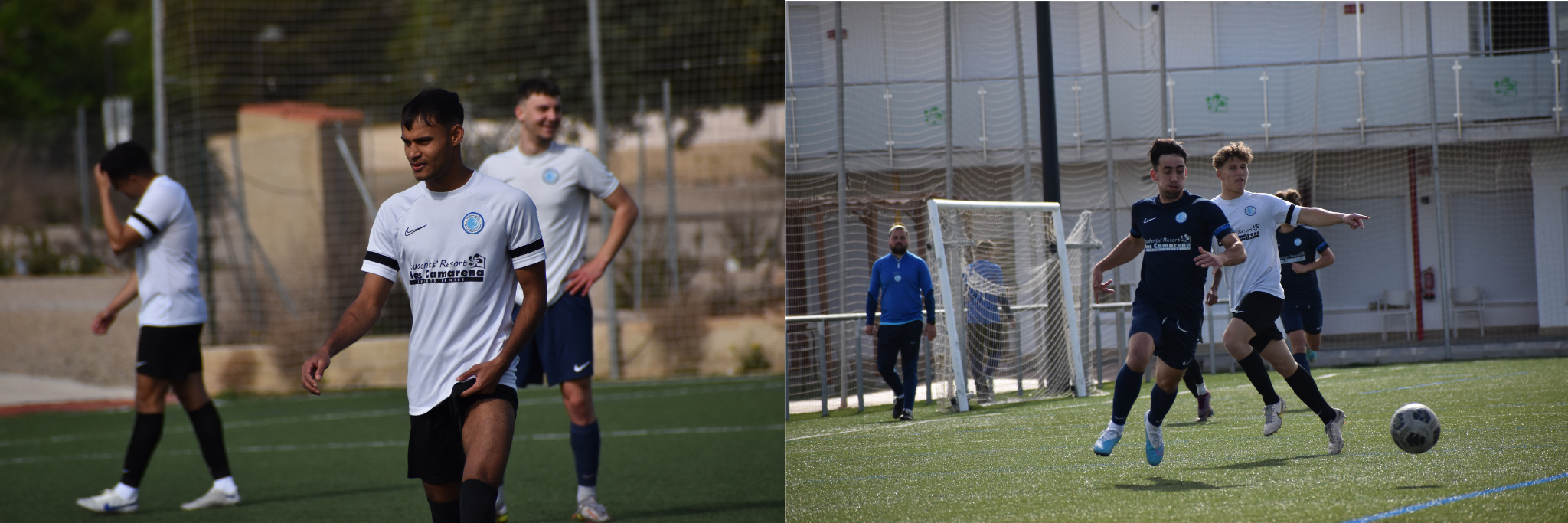
IDA Summer Programs are built around immersion.
Players don’t simply attend a few sessions and return home afterward. They become part of structured football environments where training, competition, recovery, and daily habits all contribute to development.
Depending on the location, players experience different football cultures and styles of play while continuing to develop individually.
Programs include:
Daily professional training sessions
Experienced coaching staff
Competitive match environments
Individual feedback and mentorship
Strength and conditioning support
Recovery and performance education
Residential experiences
International teammates and competition
Exposure to different football philosophies and cultures
Whether in Spain, Brazil, the UK, or Florida, players are challenged to adapt, compete, and grow in environments that push them outside their comfort zones.
That experience alone often becomes one of the most valuable parts of the summer.
Why International Football Experiences Matter
One of the biggest advantages of international soccer programs is the opportunity for players to experience the game through different perspectives.
Every football culture teaches the game differently.
In Spain, players may experience a stronger emphasis on positional play, decision-making, and technical detail.
In Brazil, creativity, improvisation, and rhythm are deeply embedded in the football culture.
In the UK, intensity, tempo, and competitiveness shape the environment.
Even within Florida-based programs, players are often exposed to diverse coaching styles and international competition.
These experiences help players expand their understanding of the game while also developing important life skills.
Players learn how to:
Adapt to unfamiliar environments
Communicate with new teammates
Build independence and maturity
Handle challenges outside their comfort zone
Develop confidence in new situations
The result is not only player development – but personal development as well.
Better Players Create Better Opportunities
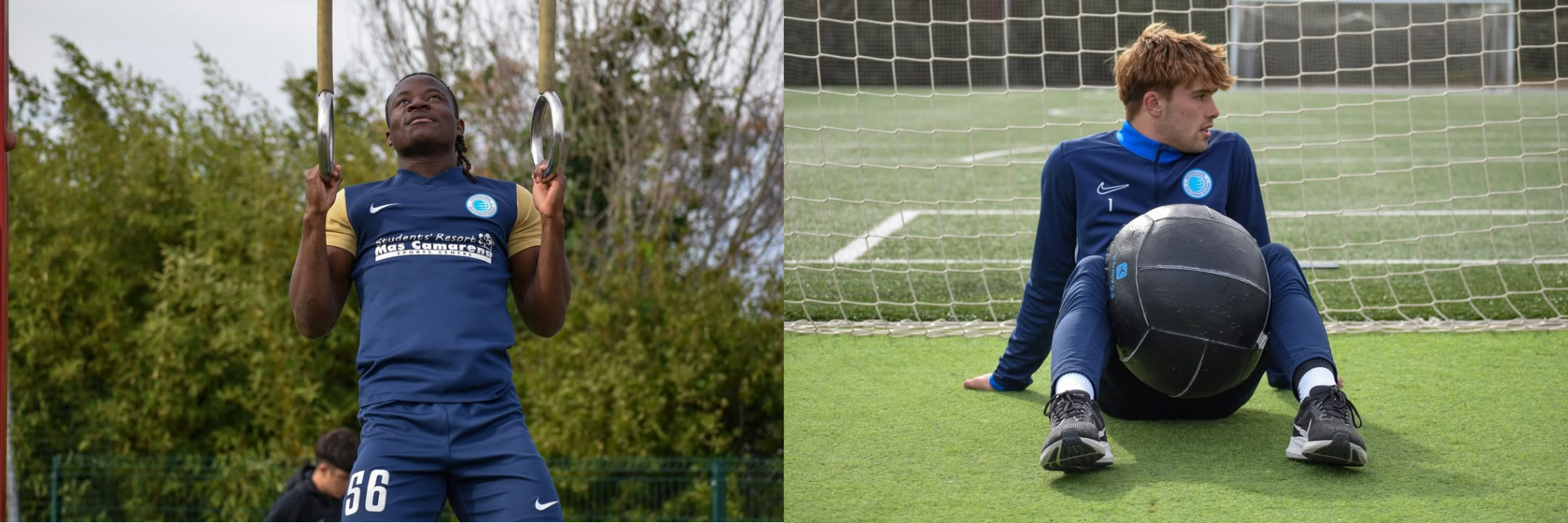
One of the biggest misconceptions in youth soccer is that exposure automatically creates opportunities.
In reality, long-term opportunities are usually created by long-term improvement.
The players who continue developing technically, tactically, mentally, and physically are often the ones who place themselves in the strongest positions for future success.
That’s why IDA Summer Programs focus heavily on:
Technical development
Tactical understanding
Speed of play
Decision-making under pressure
Confidence and independence
Professional habits and mentality
Rather than concentrating only on being seen for a few hours, players spend time developing skills and habits that continue benefiting them long after the summer ends.
And naturally, stronger players tend to attract stronger opportunities.
More Than A Summer Soccer Camp
For many players, the most impactful part of the experience goes beyond football itself.
Living and training in new environments teaches players responsibility, discipline, adaptability, and confidence.
It pushes them to grow socially and personally while learning how to navigate different cultures, expectations, and routines.
That combination of football development and personal growth is what makes international summer programs unique.
Players return home with:
Greater confidence
Increased independence
A broader understanding of the game
New friendships and perspectives
Stronger habits and routines
Motivation to continue improving
For many families, it becomes far more than just another summer camp experience.
Is Exposure Still Important?
Absolutely.
Exposure matters, and College ID Camps can still be valuable for players looking to connect with coaches and programs.
But exposure tends to be most effective when paired with real development.
Players who continue improving, adapting, and growing often create stronger recruiting opportunities naturally over time.
That’s why many players now view summer not only as a recruiting opportunity, but also as a chance to invest in their long-term development.
Don’t Just Be Seen This Summer. Be Developed.
The best summer experiences challenge players both on and off the field.
They build stronger athletes, more confident individuals, and more complete footballers.
IDA Summer Programs are designed to provide exactly that through immersive football environments in Spain, Brazil, the UK, and Florida.
Train.
Compete.
Adapt.
Grow.
And experience football beyond the showcase environment.
Play the Summer that Matters: register today!
Growing Up in Brazil
For João Vitor Guimarães Dalla Villa, football was always part of life growing up in Brazil. Like so many kids there, he grew up dreaming of becoming a professional player – not only because of the game itself, but because of what football can represent for families and futures.
“In Brazil, every kid dreams of becoming a professional footballer,” João says. “Because of that, it’s extremely competitive, and it’s hard to stand out.”
That environment shaped his mentality early. He understood quickly that talent alone would never be enough.
“I needed to be different – mentally strong, confident, and patient.”
Before joining IDA, João’s focus was fully on becoming a professional player. Although he knew college soccer existed in the United States, it wasn’t something he seriously considered at the time.
Now, after more than three years developing inside the IDA Valencia environment, João is preparing for the next chapter of his career at Monroe University in New York.
Choosing IDA Valencia
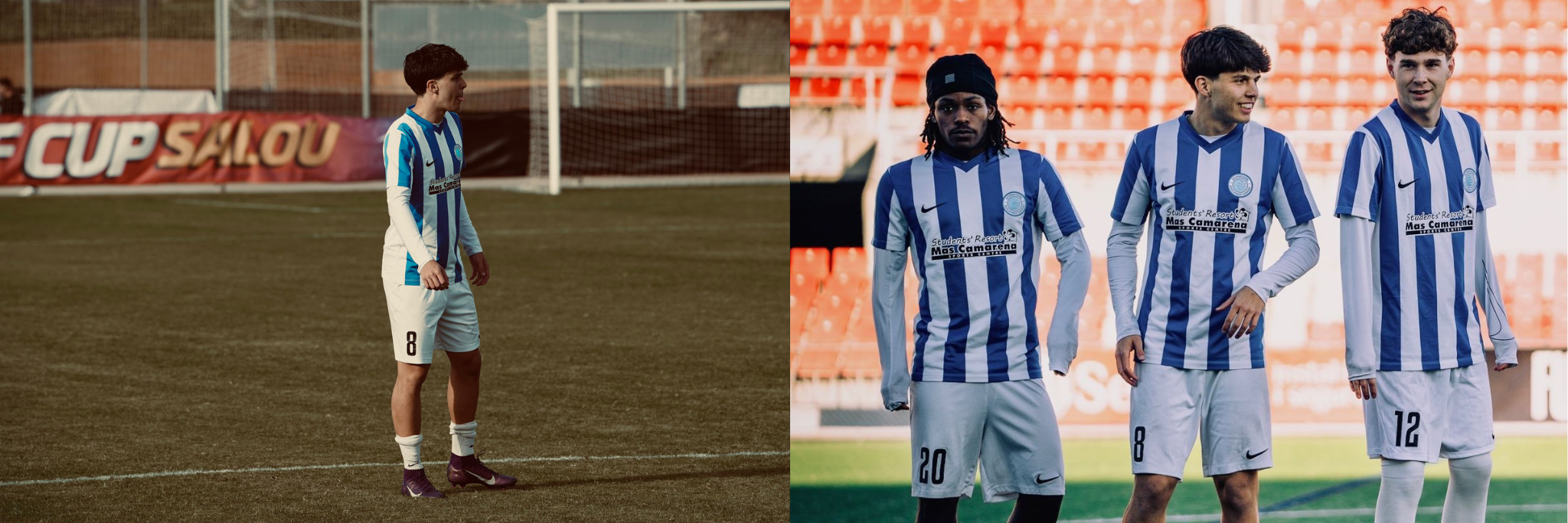
When the opportunity to join IDA Valencia appeared, João saw it as the right environment to continue developing while staying close to his long-term goals.
“I chose IDA because of the quality of the program and what they could offer me to pursue my dream.”
Arriving in Spain immediately challenged him. The level of competition, the pace of the game, and the quality of the players around him pushed him outside of his comfort zone from day one.
“My first impression was that I needed to give my best every single day,” he explains. “There were a lot of very good players chasing the same goal.”
He also realized quickly how different Spanish football was compared to what he had experienced in Brazil.
Adapting to a New Style of Football
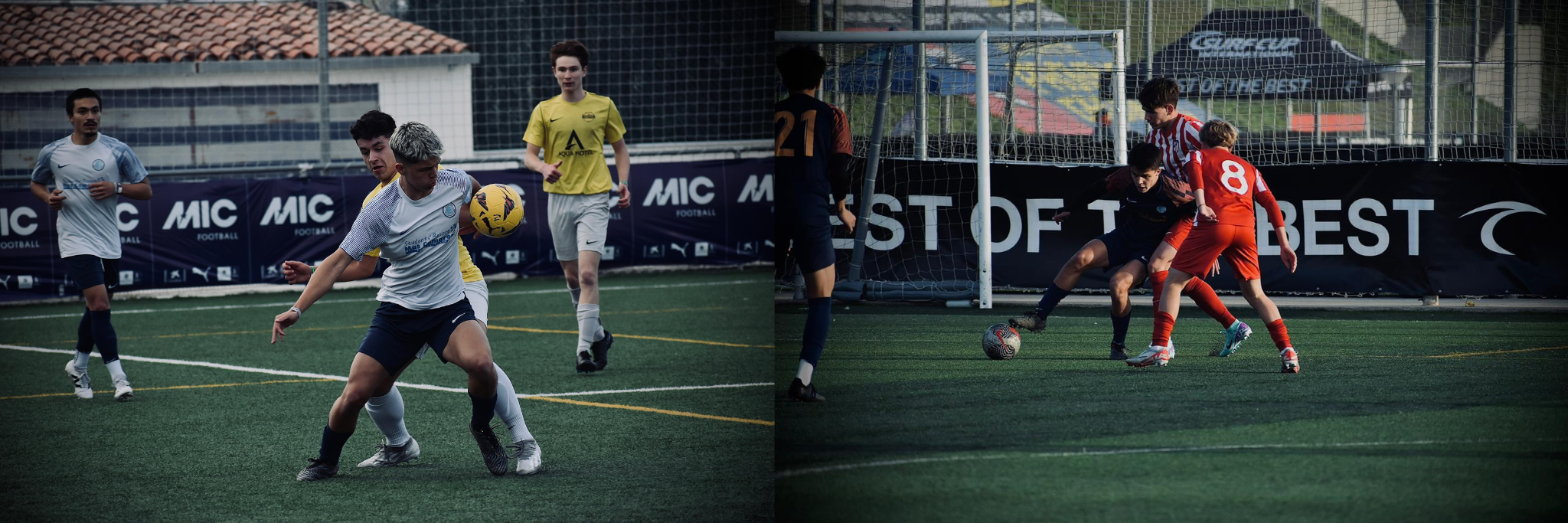
The biggest challenge for João was tactical adaptation.
“In Spain, you need quality, but also fast decision-making and tactical understanding.”
As a striker, he learned to better understand the game beyond instinct and individual ability. Knowing when to press, when to keep possession, and when to take risks became an important part of his evolution.
“My game evolved a lot in all aspects,” he says. “By the time I left, I felt like a much more complete player and a smarter footballer overall.”
Still, João believes the biggest growth happened mentally.
Leaving home at just 16 years old forced him to mature quickly and become more independent both on and off the pitch.
“Being far from my family wasn’t easy, but it made me stronger as a player and as a person.”
Learning to Live Like a Professional
Beyond training and matches, João says the lifestyle at IDA played a major role in his development.
“I think everything helped – training, coaching, competition – but the main factor was the lifestyle.”
Living abroad gave him structure, routine, and discipline. It also exposed him to different people, cultures, and perspectives that helped shape him outside football.
“I started living like a professional, and that helped me understand what it really takes to achieve my goals.”
At the same time, the experience helped him learn more about himself.
“Living abroad allowed me to meet a lot of different people and learn from all of them. I also learned a lot about who I am and who I want to become.”
Discovering the College Pathway
After more than three years in Spain, João felt ready for a new challenge. That was when he started seriously exploring the college pathway in the United States.
“I felt like I needed a new challenge to stay strong and continue chasing my dream.”
Through IDA, he connected with an agency that helped guide him through the recruitment process and evaluate different opportunities. João received interest from strong NCAA Division I and Division II programs, but he stayed patient throughout the process.
“I wanted to find the right place, not just any place.”
Eventually, Monroe University stood out.
“They offered everything I was looking for – scholarship, visibility, and a strong environment.”
For João, the location in New York, the competitive level of the program, and the belief shown by the coaching staff made the decision feel right from the beginning.
The Next Chapter in New York
Now preparing to move to New York, João is excited for another major step in his journey.
“It’s another big change in my life, and I’m ready to compete, improve, and show who I am as a player.”
Looking back, he sees IDA Valencia as a huge part of the pathway that brought him to this point.
“My time at IDA was very important for me to reach this stage. They helped me grow as a player and as a person, gave me exposure, and supported me through the whole process.”
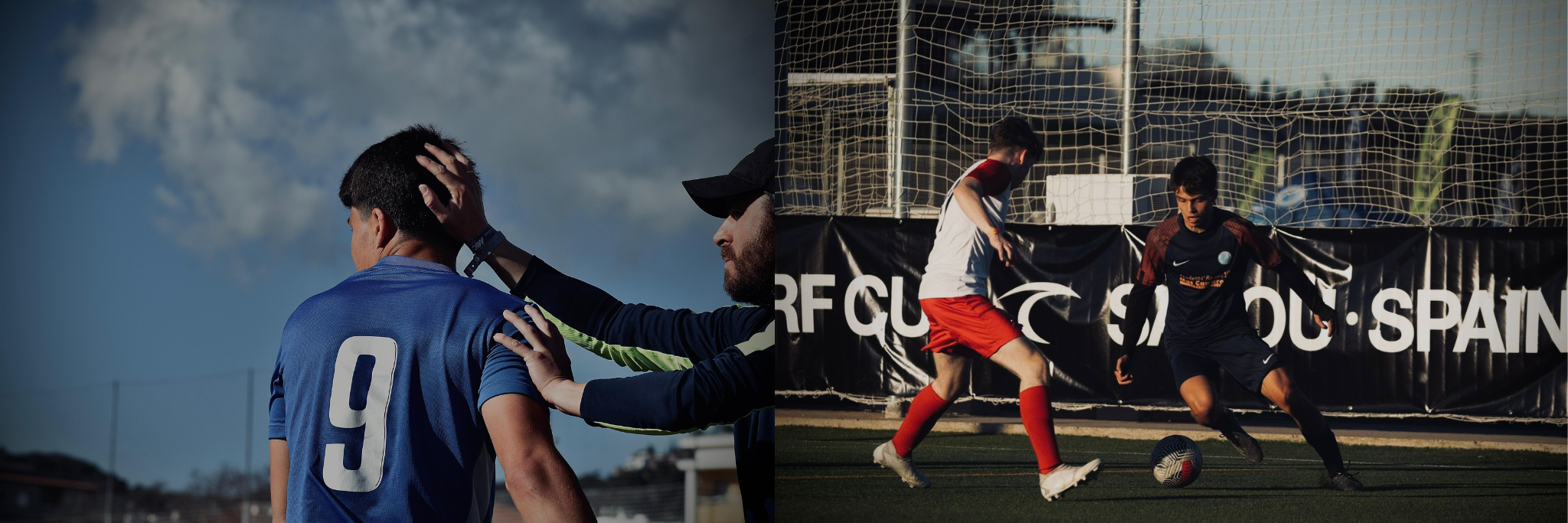
For younger players hoping to follow a similar path, his message is simple:
“Be patient and believe in yourself. Opportunities will come, but when they do, you need to be ready to take them.”
After more than three years of development in Spain, João Villa now takes the next step of his journey at Monroe University – carrying with him the lessons, discipline, and experiences built during his time at IDA Valencia.
Ready to Pursue Your Own Pathway?
From short-term experiences to full-time residency programs, IDA helps players develop in professional environments while creating real opportunities for the future.
Whether your goal is college soccer, the professional game, or simply reaching a higher level, the pathway starts with the right environment.
Applications are now open for all IDA Residency Programs for the 2026/27 season, as well as summer short-term experiences in Spain, Italy, the UK, Brazil, and the United States.
For Lucas Miranda, football started far from the traditional centers of the game.
Growing up in Isabela, Puerto Rico, he developed his passion for football in an environment where the sport was still finding its place.
“There wasn’t a very strong football culture at the time, especially technically and tactically,” Lucas explains. “But football taught me heart, resilience, and the importance of never giving up.”
That mentality would eventually take him far beyond the island he called home.
Today, after developing at IDA Valencia, Lucas is officially committed to South Dakota School of Mines & Technology (NCAA Division II) – a step that represents years of sacrifice, growth, and belief in his pathway.
Choosing the Uncomfortable Path
Before joining IDA, Lucas already had his eyes on college soccer in the United States.
But instead of rushing directly into the next step, he chose something more difficult:
development first.
“At first, I was completely set on going directly to college,” he says.
That changed after meeting Jordi Gómez – IDA Valencia’s CEO, during a showcase event.
“He approached me with an opportunity that I simply could not turn down. It gave me the chance to continue pursuing my dream while still developing in a highly competitive football environment.”
That decision brought Lucas to Valencia – and immediately exposed him to a completely different level of football.
Discovering the Real Level in Spain
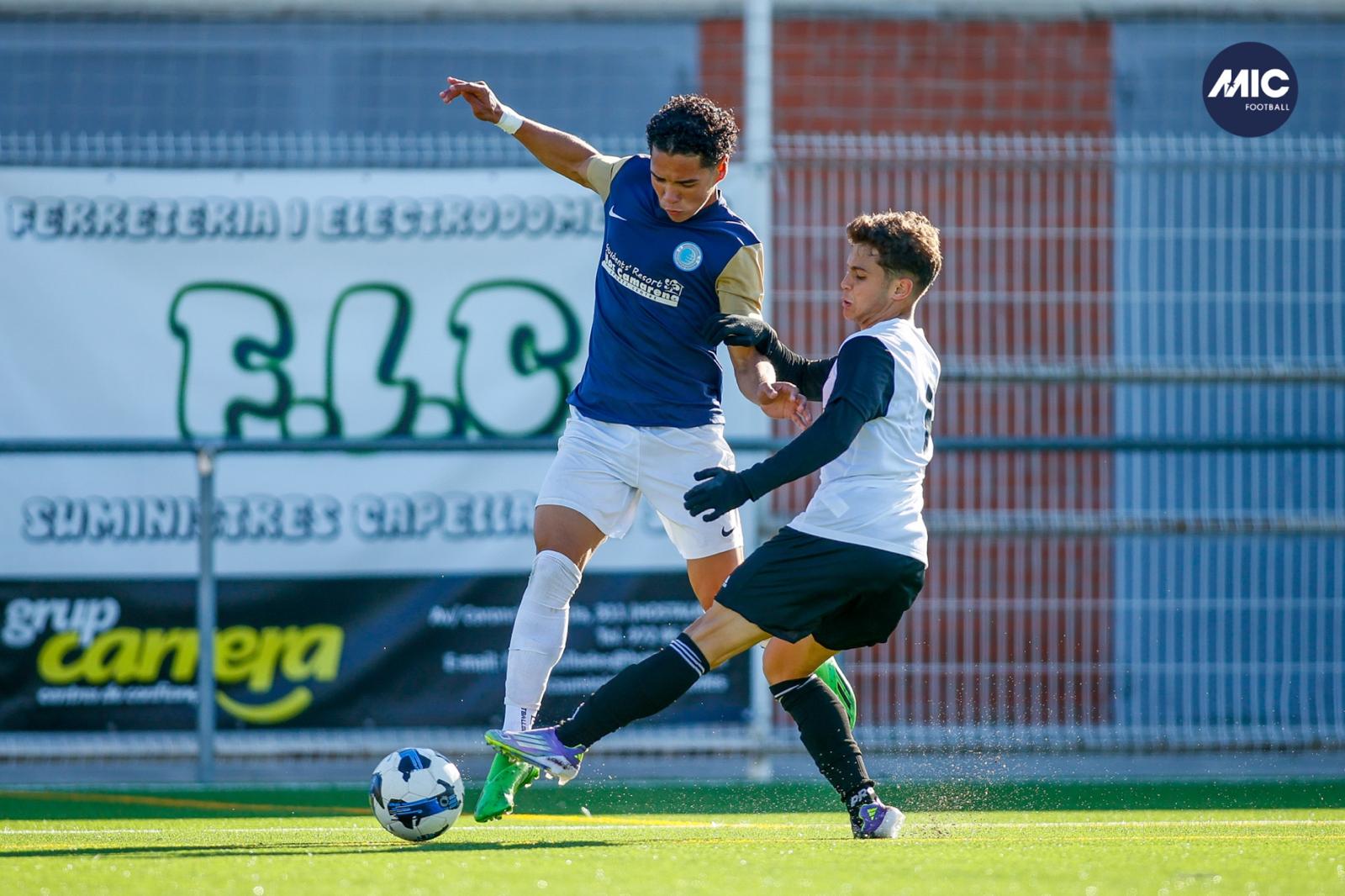
The adjustment wasn’t easy.
“The first thing I noticed was the speed and quality of the game,” Lucas says. “Teams played much faster and more collectively compared to what I was used to.”
But beyond the pace, what stood out most was the technical quality of the players around him.
“You could truly feel the passion and love for football everywhere.”
As a naturally athletic player, Lucas quickly realized that physical ability alone would not be enough in Spain.
“The biggest challenge for me was adapting to the technical and tactical side of the game because those were the weakest parts of my game when I first arrived.”
Playing faster, thinking quicker, and making decisions under pressure became daily demands.
And over time, those demands transformed him.
“By the time I left, I felt like a much more complete player and a smarter footballer overall.”
More Than Training
For Lucas, one of the most impactful parts of the IDA experience was the exposure to professional environments and the people who helped guide him through the process.
Having trial opportunities with clubs such as CD Castellón, Real Murcia CF, and La Vall A gave him perspective on how close – and how far – he was from the next level.
“Those experiences showed me that I was not far from achieving my dream,” he says. “They helped me understand exactly what I needed to improve.”
He also credits several coaches at IDA for helping shape his journey.
“Coaches like Adrián Pinazo, Carles Coto, and Javier Penadés were key figures in helping unlock my potential and motivating me throughout my journey.”
Growing Beyond Football
Like many players who leave home young, Lucas’ development extended beyond the pitch.
Living abroad forced him to mature quickly.
“I became much more independent and learned how to take care of myself,” he says. “From cooking and grocery shopping to handling responsibilities on my own.”
Being away from Puerto Rico taught him discipline – not only as a player, but as a person.
And that growth would soon prepare him for the next chapter.
Turning Opportunity Into Reality
The opportunity to play college soccer became real earlier this year, when conversations with college coaches began to accelerate.
Through the recruitment process, Lucas found a strong fit at South Dakota School of Mines & Technology, where coaches were drawn to his aggressive, technical, and fast style of play as a winger.
He ultimately received a scholarship offer – something that played a major role in his decision.
“I chose this university because it offers a great balance academically and athletically,” he says. “In college, you are a student-athlete, not just an athlete.”
Now, he’s preparing to join the South Dakota Mines Hardrockers with clear objectives in mind.
“I’m excited to finally accomplish not only my goals, but also my dreams.”
The Value of the Journey
Looking back, Lucas sees his time at IDA as a defining period in his development.
“My time at IDA was crucial for both my development as a player and my growth as a person.”
The experience sharpened his technical and tactical understanding, exposed him to higher standards, and helped prepare him for life beyond football.
And for players considering a similar pathway, his message is simple:
“Go for it and never get discouraged.”
“There will always be talented players around you, but hard work will always separate those who truly want it.”
From Puerto Rico to the NCAA
Lucas Miranda’s journey is a reminder that talent alone rarely defines a pathway.
Development does.
Environment does.
Mentality does.
From Puerto Rico to Spain, and now to NCAA soccer in the United States, his story reflects what can happen when players are willing to embrace discomfort, commit to growth, and continue chasing more.
And for Lucas, the journey is only beginning.
Ready to Take the Next Step?
Whether your goal is college soccer, professional opportunities, or simply reaching a higher level of the game, IDA provides players with the environment, exposure, and daily development needed to grow.
From short-term experiences to full-time residency pathways, players from around the world continue to use IDA as a platform to push themselves further – on and off the field.
Explore IDA programs and start your journey today.
More Than a Showcase – A Complete Pathway Experience
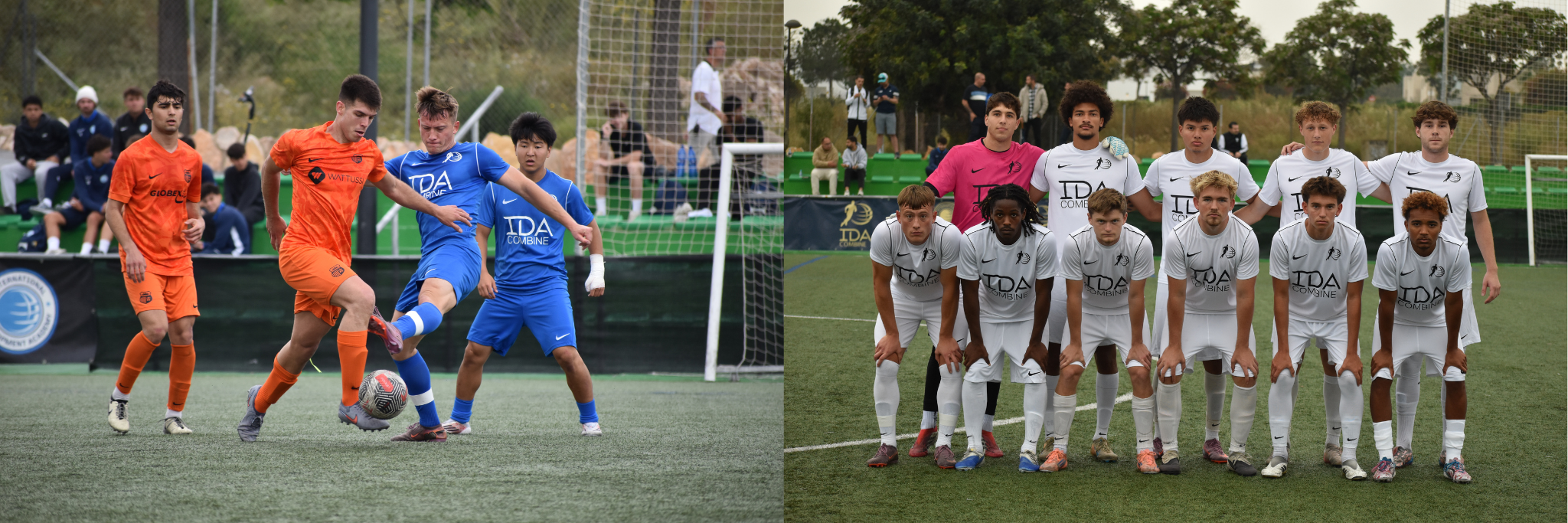
At the Mas Camarena Resort, just outside Valencia, the first edition of the IDA Pro Combine brought together more than 100 players and over 40 clubs, universities, and agencies from across the football ecosystem.
Across two days and eight matches, the objective was clear:
create a professional environment where players are not just seen – but truly evaluated.
A Project Built With Purpose
For Óscar Gómez, General Coordinator of the event, the Combine represents something fundamental for IDA:
“It represents a key step in consolidating IDA as a real bridge between talent and opportunities, aligning development, visibility and international projection in one environment.”
The intention behind the event was never ambiguous:
“The main objective was to create real opportunities for players through a competitive and professional environment – and it has clearly been achieved given the interest generated from clubs and universities.”
A Structure Designed for Reality
The Combine was built across two complementary days, each with a clear focus:
- Day 1: Competitive football with clubs
- Day 2: Academic and sporting pathways with international universities
“We aimed to adapt the environment to each profile – a first day focused on competitive football, and a second day oriented towards academic and sporting projection.”
This structure allowed players to be evaluated in the way the game actually works:
“It is essential, as players show their real performance in a competitive context – decision-making, tactical behavior and personality.”
Level That Demands Decisions
The level across the event matched the ambition behind it.
“The level has been very high, with players well prepared both technically and competitively,” Óscar explains.
That impression was echoed by those responsible for making recruitment decisions.
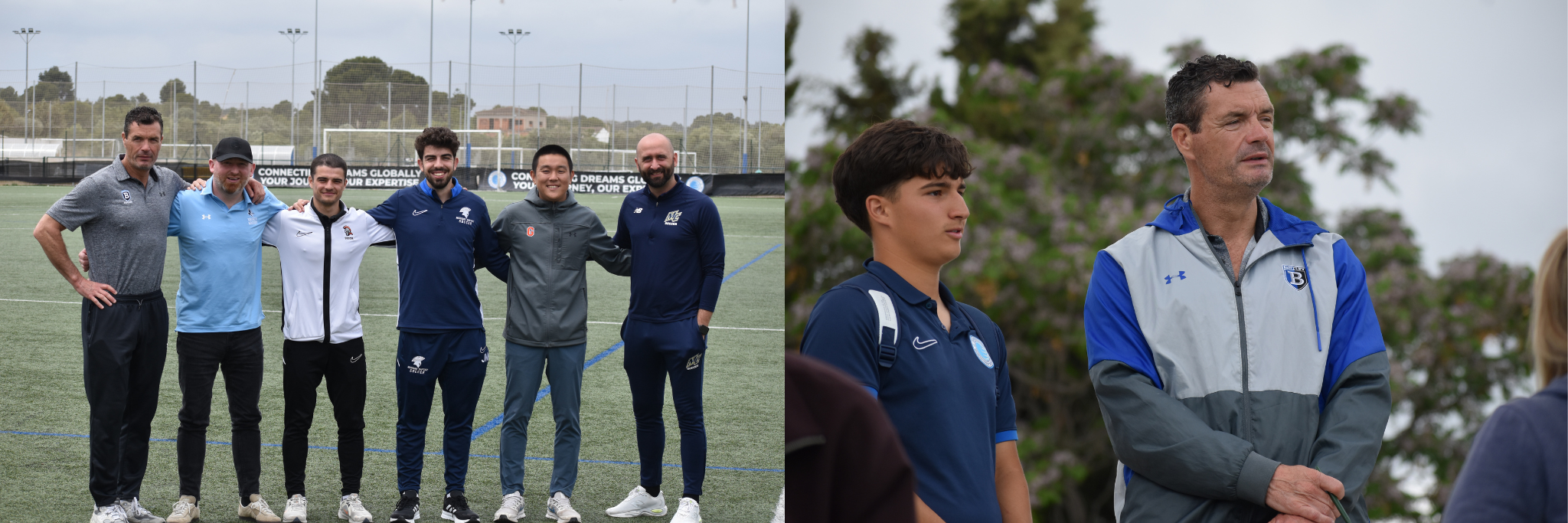
Joe Barber (Keiser University) highlighted what stood out most:
“The technical level is very high, the tactical level is also very good – and those are the qualities we look for when recruiting players from Europe.”
For Yohan Mijailović (Missouri Baptist University), the diversity and opportunity were equally clear:
“There are a lot of interesting players here – from Spain, South America, Asia and even American players – and we already have a couple of guys in the book.”
From Observation to Opportunity
This was not a passive showcase.
Over the course of the Combine, more than 60 players were identified by clubs, universities or agencies.
For Óscar, that outcome confirms the model:
“It confirms that the event fulfilled its purpose – attracting real talent and creating an environment where that talent can be detected and connected with concrete opportunities.”
From the agency side, decisions were immediate.
Luis Soler (player agent) explained:
“In these 48 hours, watching games from 9AM, we have identified a couple of players we could work with for the following year.”
And from the scholarship pathway, Michael Michailidis (Brusa Sports) emphasized both level and commitment:
“It’s been unbelievable – one of the best combines I’ve been to. The commitment from the players, their dedication to the game, and the level has been superior.”
A Complete Football Environment
What defines the IDA Combine is not only what happens on the pitch – but everything built around it.
Through Bcoach Arena, coaches and scouts had access to:
- Player profiles
- Match tracking
- Real-time evaluation tools
Beyond that, the experience was designed to create real interaction:
- Networking sessions after matches
- Shared meals – including a Uruguayan BBQ and Valencian paella
- Access to professional matches
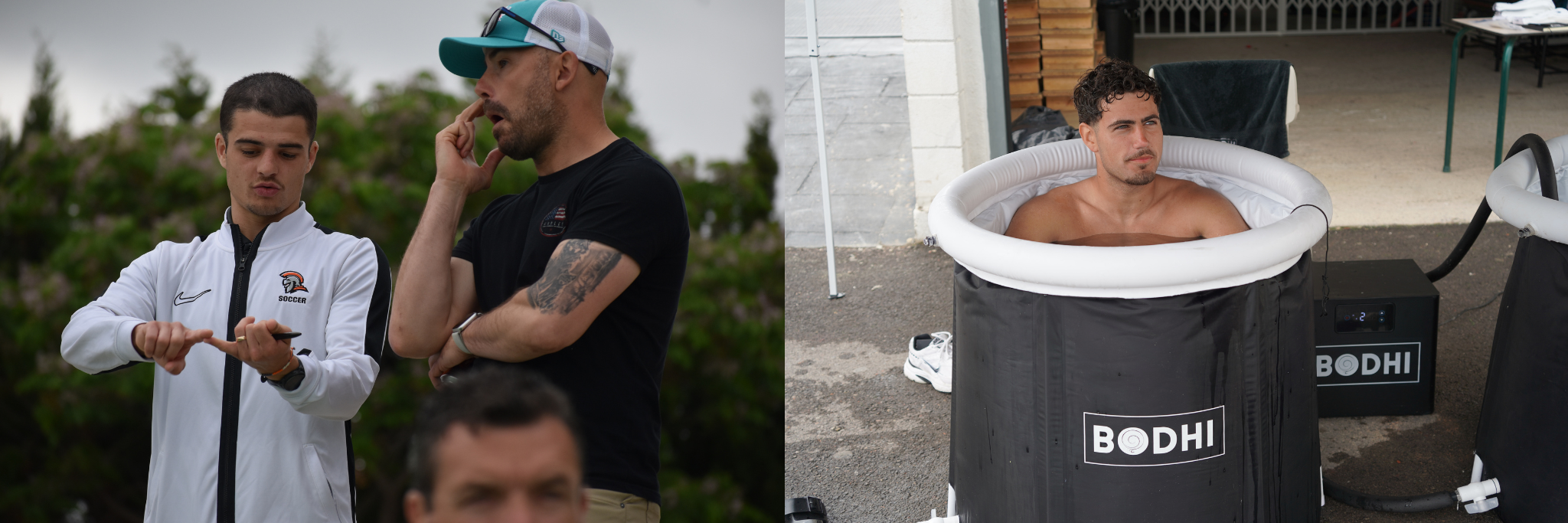
- Recovery and performance support, including partners like Somos Bodhi
“It is key, because it is where relationships, trust and conversations are built – and often lead to real opportunities,” says Óscar.
For Fede Ruiz (Hundra Sports), this was a defining element:
“The networking opportunity was great – to meet coaches, representatives and people within football and build relationships.”
A Platform for Evaluation
From a talent management perspective, the format itself creates value.
Iñaki Eraña (ElevenUp Sports) pointed directly to that:
“The format of observing players and enjoying multiple matches is extraordinary – not only for agencies like us, but for all coaches who came here.”
And from the university side, Gary Crompton (Bentley University) emphasized the environment:
“The facilities are first class – turf pitches, gym, everything – and it’s a great quality program.”
The Player Experience
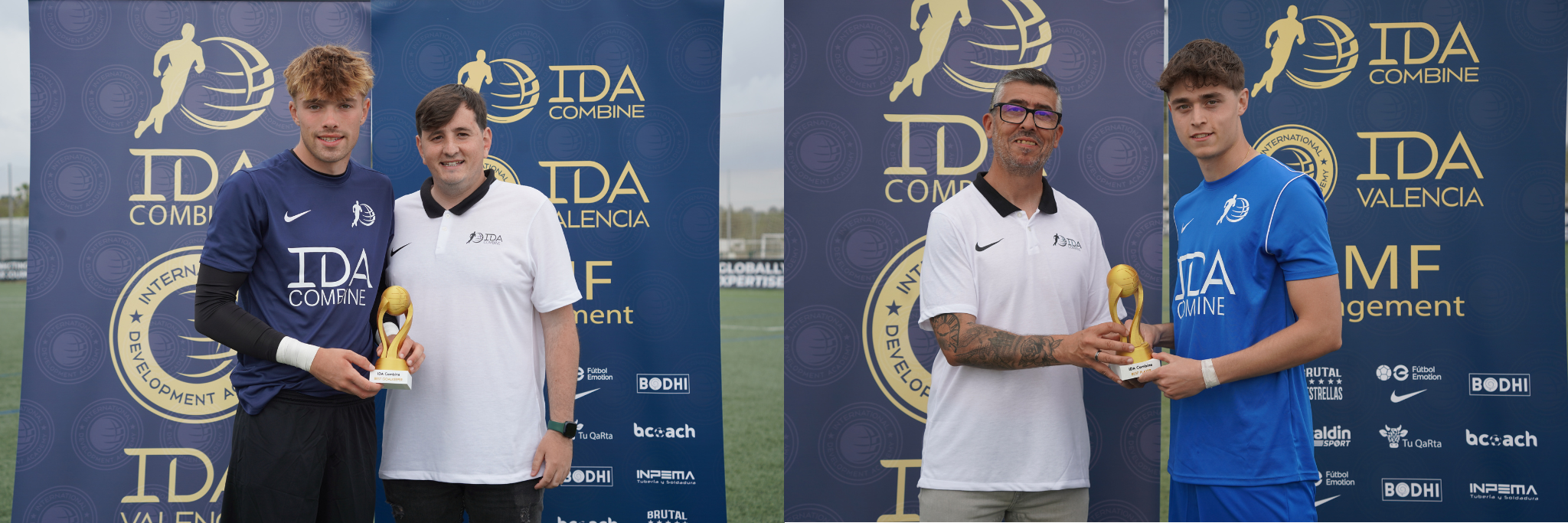
At the center of everything are the players – performing in an environment where every action matters.
Rubén Dray (MVP Goalkeeper) described the reality of the moment:
“Being in front of all these coaches, it’s a really good chance to impress – especially in the first edition of the IDA Combine.”
Ignacio Ramón (MVP Player) highlighted the environment created around them:
“Really happy to participate in this experience – the care and the treatment all players received has been very good.”
From the coaching side, Luis Jorge Ruiz (IDA coach) reinforced what was visible on the field:
“Players have shown a great attitude, and coaches have been able to see that many are prepared to take the next step.”
And as Luis Manuel Muñoz (IDA staff) added:
“It’s an event where players can show both individual and collective potential – and we’ve seen them enjoy and give 100%.”
What Makes It Different
The Combine is not defined by a single element, but by the combination of all of them.
“The combination of a real competitive environment, the presence of key stakeholders, and a clear focus on creating real connections – not just visibility,” explains Óscar.
That is where the difference lies.
What Comes Next
For players, the message is clear:
“Every action on and off the pitch matters – these opportunities must be approached with a professional mindset and maximum preparation.”
For IDA, this is just the beginning.
“The next step is to continue growing, improving the experience, and expanding the network of clubs and universities.”
A First Edition That Sets the Standard
The first IDA Pro Combine was not just an event – it was a working model of what player development environments can be.
A place where:
- Talent is evaluated in context
- Decisions are made in real time
- And opportunities are built through connection
Because when the environment is right, one thing becomes clear: performance speaks – and people are listening.
For Joel Lucero, football has always been part of his life.
Growing up in Weatherford, Oklahoma, he started playing at just three years old. But like many young athletes in the U.S., his path wasn’t completely linear.
At 11, he stepped away from the game to play American football – only to realize quickly that something was missing.
“I quit midway through the season because I missed football so much,” he says. “And I haven’t left since.”
That decision brought him back to the game – but it was years later, through an IDA camp experience in Spain, that his perspective on football would truly change.
Looking for More
Before attending IDA, Joel’s goal was simple: improve as a player and open doors for the future.
“Whether that was a college in the U.S. or a team in Europe, I just wanted an opportunity,” he explains.
At the time, he wasn’t sure which path was right for him – or even what level he truly belonged at.
That uncertainty is what led him to IDA.
“I saw IDA online and thought it would be a great opportunity to travel and experience Spain.”
A Different Level
Joel arrived expecting a football-focused experience.
What he found was something much deeper.
“I thought it would be strictly football and nothing special,” he says. “But it was so much more than that. The people there really made the experience special.”
On the field, the difference was immediate.
“The level of play in the U.S. is nothing compared to what I experienced at IDA. The drive to play and win was greater than anything I had seen before.”
It wasn’t just the technical level – it was the mentality.
The intensity.
The urgency.
The expectation to compete every day.
A Turning Point in Perspective
For Joel, everything shifted after his first match.
“I think after the first game, my perspective changed on everything,” he says. “Seeing how much drive people had to just play and be better made me realize that I wanted the same thing.”
That moment became a turning point – not just in how he played, but how he approached the game.
“The experience made me realize that no matter what I was doing on the field, it had to be at my best.”
Redefining the Goalkeeper Role
As a goalkeeper, Joel’s biggest transformation came in how he understood his role.
Before IDA, his style was more traditional – reactive and focused on shot-stopping.
“I used to play like a typical American goalkeeper – more passive and strictly a shot stopper.”
That changed quickly.
“IDA showed me there was so much more than that.”
The environment pushed him to become more active, more vocal, and more involved in the game.
His confidence – something he admits he struggled with – was tested daily.
“Whether it was challenging for balls in the air or asking for the ball with my feet, I had to change the way I thought.”
Even communication became part of the development process.
“Not knowing much Spanish and trying to communicate forced me to find new ways to connect with my teammates.”
A Different Mentality
Beyond the technical and tactical side, the biggest change came in Joel’s mindset.
The experience made him more accountable, more driven, and more demanding of himself.
“It made me hungrier as a player,” he says.
“I learned that in training, I need to give everything – even if I’m tired or hurt. And not make excuses if I mess up.”
That shift – from participation to purpose – is what ultimately set him apart.
From Camp to College
What started as a short-term experience quickly became something more.
The exposure, the environment, and the level pushed Joel to put himself out there – and it paid off.
He is now committed to Southern Nazarene University (SNU) in Oklahoma, a D2 program, where he will continue his career at the collegiate level.
“I’m excited to travel, meet new people, and play with teammates I can call family.”
Looking Ahead
As he prepares for this next step, Joel’s focus is clear.
“I want to play as many minutes as I can and continue becoming a better player and a better person.”
But the foundation for that next chapter was built during a short period that changed everything.
More Than a Camp
For Joel, the IDA experience was more than just a trip abroad.
It was perspective.
It was exposure.
It was a shift in mentality.
“It showed me there is so much more to football than what I had been exposed to before,” he says. “It taught me to be as hungry as possible.”
A Message to Other Players
For players considering a similar experience, his advice is simple:
“If you’ve never left the U.S., go for it every time.”
“The way of playing and the way of life in Europe is so different. Leaving the U.S. is a blessing for a growing player.”
“Take as many opportunities as you can – even if they’re not in the U.S.”
This Summer, It Starts with One Decision
Joel’s story is proof that development doesn’t always require long-term commitments.
Sometimes, one experience is enough to change everything.
From Oklahoma to Spain – and now to college soccer – his journey shows how stepping into a new environment, even briefly, can redefine what’s possible.
IDA Summer Programs are designed to give players that opportunity: to train in a professional setting, compete internationally, and understand what the next step truly looks like.
For players willing to step outside their comfort zone, it’s not just a trip.
It’s a starting point. Register now!
International Development Academy is set to take a significant step forward this Easter, traveling to MICFootball 2026 with seven teams across multiple age groups—marking one of the most complete representations of the academy on a global stage.
With U16 Navy, U16 Royal, U18 Navy, U18 Royal, U18 White, U19 Navy, and U19 White all competing, IDA’s presence goes beyond participation. It reflects the growth, structure, and ambition of a project designed to develop players within a unified identity.
“For us, it represents a very important step as an academy,” said Academy Director Vicente Bosch Tebar. “It’s not just about participating, but about competing with seven teams across different age groups. Being present with so many players allows us to experience the tournament as a unified club, where everyone shares the same identity.”
A Global Stage for Development
MICFootball has built a reputation as one of the most competitive youth tournaments in the world, bringing together elite academies, professional club structures, and international teams in a high-intensity environment.
For IDA, this is exactly where development accelerates.
“It is essential,” Vicente explained. “These types of tournaments push players to their limits—not only technically and tactically, but also mentally. It’s where you can truly measure your level against some of the best academies in the world.”
In a format where teams face different opponents in quick succession, players are exposed to varying styles of play, rhythms, and levels of intensity—forcing constant adaptation.
“Players are exposed to different styles, rhythms, and levels of intensity in a short period of time,” Vicente added. “This accelerates their learning process, as they are constantly required to adapt and make decisions under pressure.”
U16 Navy Drawn into a High-Level Group
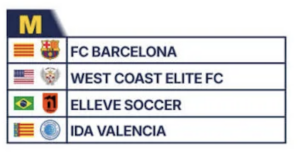
At the center of IDA’s participation is the U16 Navy group, drawn into a standout group featuring FC Barcelona, a Brazilian side, and top American opposition.
For Head Coach Luis Manuel Muñoz Galaso, this is exactly the type of challenge the group has been preparing for.
“Our first reaction to the group was very positive—we see it as a great challenge,” he said. “Facing teams like FC Barcelona, a Brazilian side, and a top American team is exactly the kind of competition we’re looking for.”
The sequence of matches adds another layer to the test.
Starting against Brazilian opposition, the team expects a game defined by creativity and individual quality. The second match, against FC Barcelona, will demand tactical discipline, concentration, and speed of play. The final group match against American opposition is likely to bring a different physical and competitive dynamic.
“Each opponent will demand different solutions,” Luisma explained. “We’re working on adaptability and reading the game effectively. Adaptability will be crucial—we want our players to adjust quickly and respond well to different game scenarios.”
Facing Barcelona: A Defining Experience
The matchup against FC Barcelona stands out—not only for its prestige, but for what it represents in the players’ development journey.
“When facing teams like FC Barcelona, the key is learning,” Luisma said. “We want our players to understand the level required, especially in terms of speed of play, positioning, and decision-making.”
For IDA, these moments are not just about results, but about exposure to the highest standards of the game.
“Facing top academies such as FC Barcelona creates an environment that is much closer to professional football,” Vicente noted. “This is where players begin to understand what the next level truly demands.”
Adaptability and Identity
Competing in a tournament like MIC requires more than preparation—it demands adaptability.
With teams from different countries and football cultures, the ability to read the game and adjust quickly becomes a decisive factor.
“In this type of competition, there is no margin for error,” Vicente said. “Players must quickly understand what each game demands and adjust accordingly. Adaptability often makes the difference.”
At the same time, IDA remains committed to maintaining its identity.
“We believe in maintaining our identity, but also adapting certain aspects depending on the opponent,” Luisma added. “It’s about finding the right balance between staying true to our principles and being competitive.”
More Than Results
While the level of competition is high, both staff and players approach the tournament with a broader perspective on success.
“Performance is important, but it never comes before development,” Vicente explained. “We want players to compete to win, but always understanding that every match is an opportunity to learn.”
For the coaching staff, the objective is clear: growth, maturity, and a deeper understanding of the game.
“Beyond results, we want the players to gain confidence, maturity, and a deeper understanding of the game,” Luisma said. “These are the kinds of experiences that help shape their future.”
A Step Forward for the Academy
As IDA prepares to compete across seven teams, MICFootball represents more than just a tournament—it is a reflection of the academy’s pathway in action.
“Success is not only measured by results,” Vicente concluded. “For us, it means seeing our players compete with personality, adapt to different situations, and show growth throughout the tournament.”
With a clear identity, a growing presence, and players ready to test themselves at the highest level, IDA enters MICFootball with ambition—and with purpose.
“Enjoy the experience, but understand where you are,” Luisma said. “Compete with courage, personality, and ambition—because these are the environments that truly shape a player’s development.”
International Development Academy (IDA) is proud to introduce the IDA Pro Combine – a new, high-level experience designed for players who are serious about their development and interested in exploring next-step opportunities in the game.
This is not a traditional camp or a one-off showcase.
The IDA Pro Combine is a structured, professional environment where players train, compete, and are evaluated while gaining exposure to both clubs and university programs.
A More Complete Approach to the Combine Experience
The Pro Combine has been designed to go beyond simple visibility.
Throughout the week, players will take part in a balanced program that combines:
Tactical and technical training sessions
Competitive matches against Spanish clubs
Individual feedback and performance analysis
Educational sessions around pathways and decision-making
The objective is not only to provide exposure, but to help players better understand where they stand and what their next steps could look like.
Clubs and Colleges in Attendance
Players will have the opportunity to compete in front of and interact with a range of clubs and college programs.
Confirmed Clubs
CD Acero
CD Utiel
Torrent CF
UD Vall de Uxó
Vila D’Onda
Quart de Les Valls
Alqueries CF
La Nucía
CD Don Bosco
Ribarroja CF
CD Malilla
CF Gandía
CD Soneja
Mislata CF
Ellas Syros FC (Greece)
Confirmed Colleges
Indiana Tech (NAIA #6)
USC
Bentley University
Gettysburg College
Cumberland University (#14)
This mix reflects IDA’s approach of connecting players with opportunities across both European club environments and the U.S. college system.
Supporting Different Player Pathways
One of the key aspects of the IDA Pro Combine is helping players and families better understand their options.
Whether a player is interested in pursuing opportunities in Spain or exploring the U.S. college pathway, the event provides:
Direct exposure to coaches and recruiters
Insight into different development routes
Guidance on what each pathway requires
As Tommaso Trevisan, COO of Global Soccer Alliance, explains:
“Our role is to help players and families better understand the landscape. By bringing together both club and college environments, we’re able to provide more context and help players make more informed decisions.”
A Professional and Structured Environment
The IDA Pro Combine is delivered within IDA’s academy framework, ensuring a level of structure and consistency throughout the experience.
Players are coached and evaluated within a setting that reflects the expectations of the next level, while still being supported throughout the process.
Vicente Bosch, Lead of the IDA Pro Combine, shares:
“The focus is on creating a realistic environment where players can perform, receive feedback, and understand what is required to progress. It’s about clarity as much as it is about opportunity.”
Jordi Gómez, COO of IDA Valencia, adds:
“We want players and families to feel confident in the experience. Everything is designed to be organized, transparent, and aligned with how we operate day to day at the academy.”
A Selective Experience
The IDA Pro Combine is intended for players who are ready to step into a more demanding environment and are open to being evaluated.
While exposure is part of the experience, the emphasis remains on:
Performance
Learning
Understanding next steps
Looking Ahead
The IDA Pro Combine reflects IDA’s ongoing commitment to creating structured, meaningful opportunities for players within the global game.
By bringing together training, competition, and pathway education in one setting, the goal is simple:
To give players a clearer picture of where they are and where they can go next.
Register now: https://internationalda.com/pro-combine/
The FC United 2014 Boys competed alongside more than 220 teams from 31 countries, gaining exposure to elite international opposition in a high-level tournament environment designed to challenge players both on and off the pitch.
What Is FC United?
Designed as a next-step opportunity beyond the training environment, FC United brings together top players from different countries to compete in elite international tournaments.
Rather than operating as a standalone team, FC United functions as a pathway outcome – giving players real-world exposure to international competition, mixed-nationality squads, and diverse football cultures.
Powered by the same coaching, recruitment, and operational structure behind IDA’s international programs, FC United allows players to test their development in high-performance environments where adaptability, resilience, and growth through challenge are essential.
A Key Moment in the IDA Pathway
While IDA focuses on daily training, individual development, and long-term progression, FC United provides the next step: testing those principles in unfamiliar environments, against diverse playing styles, and under tournament pressure.
Rather than operating as a standalone team, FC United is positioned as a pathway outcome – a bridge between the training ground and the global game.
A Truly International Squad
Bringing together players from different footballing cultures and backgrounds is a core element of the FC United model. Once in Spain, the group was required to quickly adapt – communicating effectively, understanding new teammates, and performing collectively in a competitive setting.
“It was fun to be on a team and hang out with players from around the world,” said Sully, FC United goalkeeper. “I really liked playing against Everton. It was cool to play a pro academy.”
 This international mix reflects IDA’s belief that exposure to diversity accelerates development, helping players grow not only as footballers, but as individuals.
Competing on a Global Stage
Each match presented unique tactical and physical challenges, demanding flexibility and resilience from the players. Adapting to different game rhythms, playing styles, and competitive standards is a central component of international player development.
Following the group phase, FC United narrowly missed further progression after a closely contested Silver Quarter Final against Kyalami United (South Africa). While results are always part of competition, the experience provided valuable lessons in teamwork, composure, and performance under pressure.
From a parent perspective, the growth was clear.
“My son truly embraced a new experience in a foreign country with players from all over the world,” said Nik, father of Sully. “He grew immensely in confidence as a player and, most importantly, as a person during our time in Spain at SCI Salou.”
The Surf Cup International Environment
Now in its fifth edition, Surf Cup International Salou has established itself as one of Europe’s most respected youth tournaments. With teams representing six continents, the event offers a unique global setting where players are challenged beyond domestic competition.
For many families, the environment highlights the standards required at the international level.
“After the tournament, and the talent we saw on display, Muhammad decided that he has to do a lot more to keep up with the level of the rest of the continents,” shared Sheriff, Muhammad’s father, from South Africa.
More Than a Tournament Experience
For IDA, participation in events like Surf Cup International Salou goes beyond match results.
Playing in mixed-nationality squads, competing against elite international academies, and experiencing different football cultures are defining elements of the development pathway. These experiences foster independence, confidence, and cultural awareness – qualities that extend far beyond the pitch.
Programs like FC United, delivered in collaboration with Global Sports Experiences (GSE), reflect IDA’s commitment to preparing players for the realities of the global game.
As the pathway continues to evolve, FC United remains a key step for players ready to test themselves on the international stage.
We look forward to building on this experience in 2026.