

For two days in Haiti, the focus wasn’t on finding the next player. It was on developing the people responsible for developing them.
As part of its partnership with the Ligue des Jeunes d’Haïti and TapIn, International Development Academy recently delivered a two-day Coaching Education Program for 64 coaches in Haiti, providing practical tools they can apply in their own environments – from planning training sessions and understanding player development to tactical observation and performance analysis.
Led by IDA Academy Director Vicente Bosch and coach and performance analyst Luis Jorge, the program combined classroom education with practical sessions on the field.
But behind the two-day course sits a much bigger ambition: creating stronger pathways for young Haitian players by investing in the coaches who work with them every day.
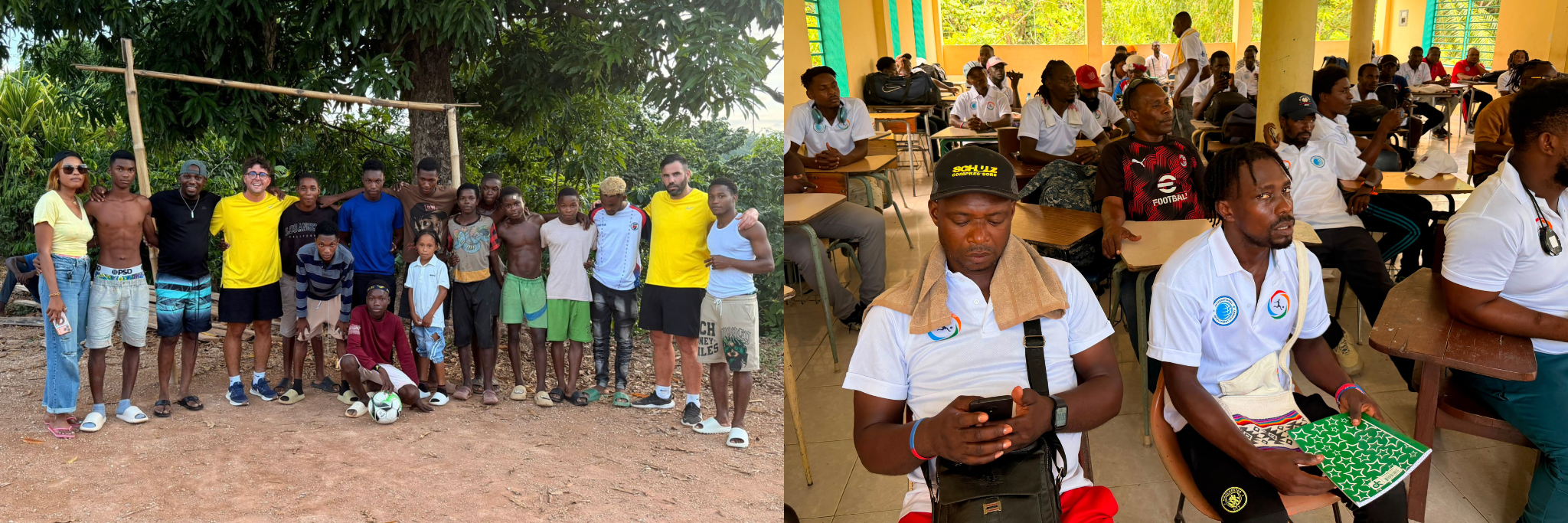
Football is deeply embedded in everyday life in Haiti. According to Ligue des Jeunes d’Haïti founder Pedro, participation among young people is enormous, but access to trained coaches, facilities, equipment and technology remains limited.
For Pedro, that gap between passion and infrastructure was one of the driving forces behind creating the program.
Many young Haitian players grow up playing on dirt fields with limited resources, he explained, while the coaches responsible for their development often have little or no access to formal coaching education.
His long-term ambition goes far beyond improving individual training sessions.
Pedro hopes investment at the grassroots level can eventually help create more opportunities for players developed entirely within Haiti to progress through the pathway and represent their country at the highest level.
“My dream is to one day see most of the players from the national team be players that are born and raised in Haiti,” he said.
That starts, he believes, by giving the people developing those players better tools.
Throughout the course, Bosch and Jorge focused on concepts that could translate directly into the coaches’ everyday environments.
For Bosch, the objective was to provide a framework rather than simply prescribe exercises.
“I wanted to open up new horizons for them – giving them practical tools to properly analyze players and design structured training sessions that truly put the player’s development at the center,” he said.
Jorge echoed that player-first approach.
“The most important thing is to focus on the player and his individual development,” he explained. “From there, we shared our approach to planning a microcycle and how we structure a session based on a progression of exercises.”
The sessions covered areas including training preparation and structure, player responsibilities, recovery, physical preparation, tactical concepts and understanding individual strengths and weaknesses.
And the learning wasn’t confined to a classroom.
Game footage became a starting point for discussion between the IDA staff and participating coaches, allowing both sides to analyze situations, exchange perspectives and explore how the same football concepts could be applied within different environments.
For Jorge, those conversations were one of the highlights of the program.
“We shared several game clips that we found interesting to discuss with the Haitian coaches, allowing us to exchange different perspectives and explore how to work on those moments in various contexts and according to their specific needs.”
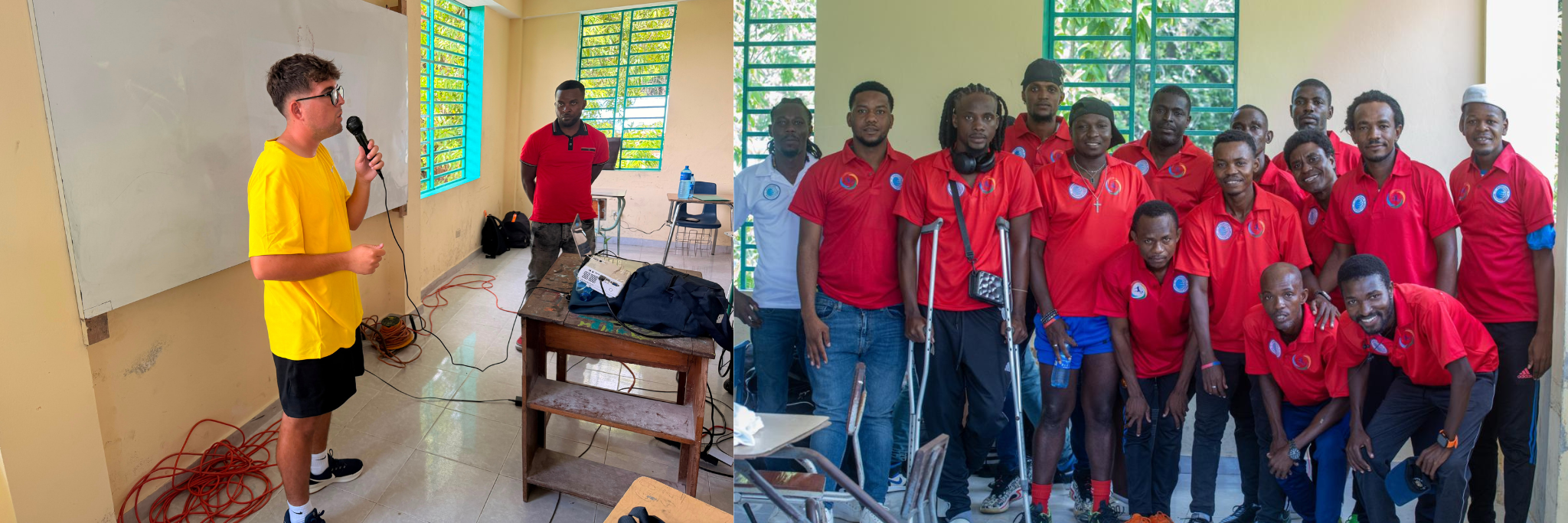
One reality shaped many of those conversations: coaches in Haiti do not necessarily have access to the infrastructure and technology commonly associated with performance analysis in professional environments.
But effective analysis doesn’t have to begin with sophisticated equipment.
“Technology is a tool that facilitates performance analysis, but it isn’t essential,” Jorge said.
Instead, coaches can determine specific elements they want staff members to observe during a match, take notes and use those observations to make corrections.
“It’s not necessary to analyze everything,” he added. “Just the key aspects and what we’ve been working on.”
It is a simple distinction, but an important one: development doesn’t have to wait for perfect conditions.
Bosch saw the same willingness to translate new concepts into the resources already available.
“Their thirst for practical knowledge really stood out,” he said. “They asked very specific, insightful questions about physical preparation and tactical concepts, always focusing on how they could immediately adapt and apply those methods to their own teams.”
Pedro noticed it too.
Despite knowing they would receive the course materials digitally afterwards, he recalled coaches taking notes throughout the classroom sessions and remaining deeply engaged.
“You could see they want to learn. They want to be better,” he said.
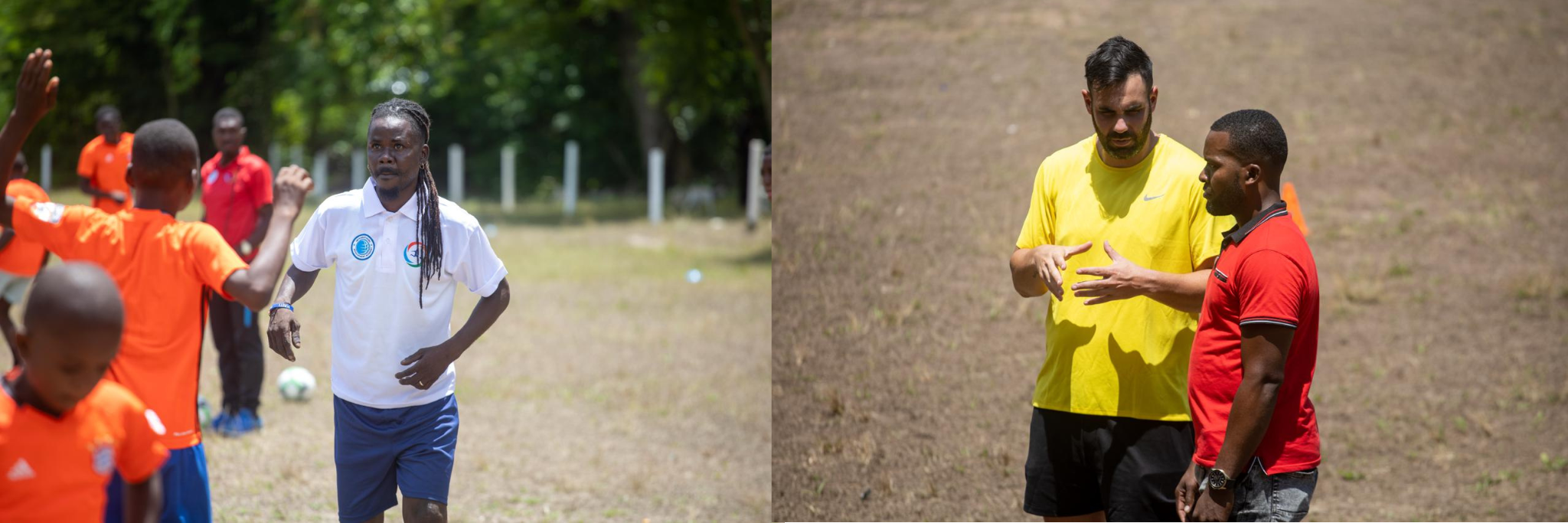
For IDA, the Haiti Project also represents something larger than a single coaching course.
“First and foremost, it’s about giving back,” Bosch said. “Visiting a country like Haiti – where resources are limited and the path isn’t easy – allows us to use our methodology as a force for good. Sharing IDA’s expertise helps elevate the local football community from the roots up.”
But the exchange was never intended to move in only one direction.
Days after returning, Jorge said the experience had reinforced an important principle in his own coaching: methodology has to respond to its environment.
“You realize how important it is to adapt to the context,” he said. “It’s very important to make the most of all the resources we have and to know how to help players observe, understand the game, and improve.”
For Bosch, the biggest takeaway was even more personal.
“It was a deeply humbling experience,” he said. “Seeing their immense passion for the game – coaching purely out of love for football despite having virtually no resources – reminded me of the true essence of coaching. It made me appreciate what we have and brought home a huge personal lesson.”
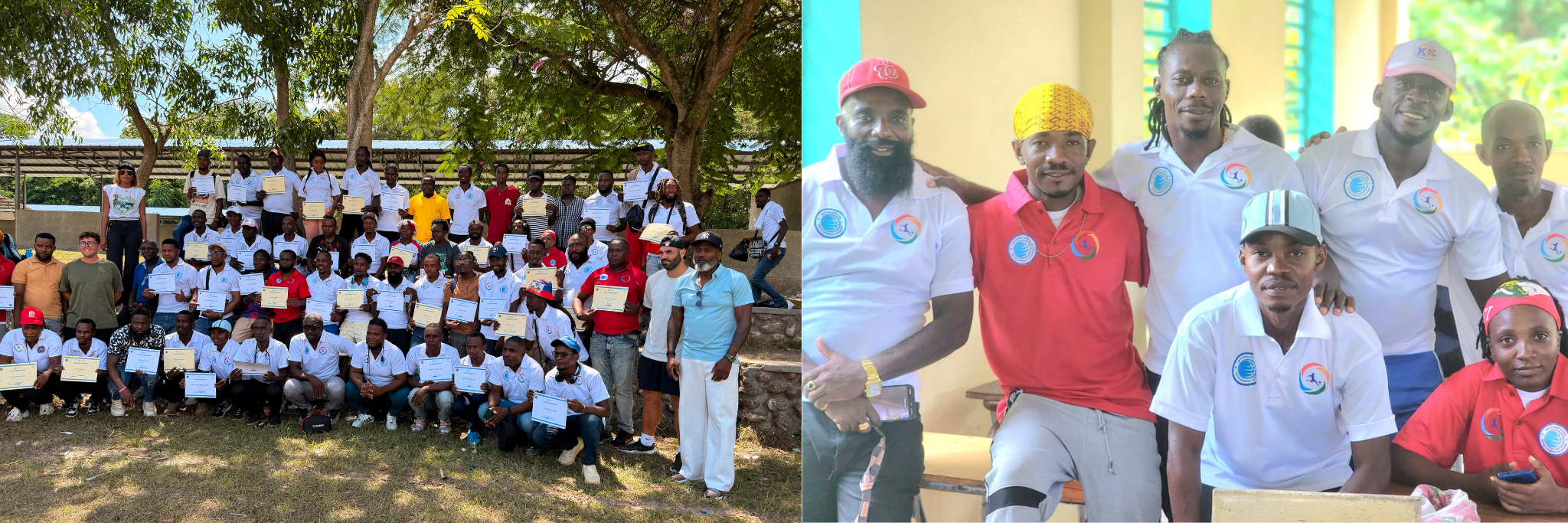
The Coaching Education Program concluded with 64 coaches completing the two-day course, receiving certificates and taking home the materials from the program to continue applying and developing what they had learned within their own teams and environments.
But no one involved sees two days as the finished product.
“We definitely will need more coaching education classes,” Pedro said. “The two days were amazing, but not enough.”
What those two days can provide is a starting point.
The immediate impact may be seen in better-planned sessions, more intentional observation, greater focus on individual development and coaches equipped with new ways of thinking about the game.
The longer-term ambition is much bigger.
By investing in coaches, the goal is for that knowledge to reach team after team, player after player – strengthening the environment in which Haiti’s next generation grows up playing the game.
For IDA, that ambition reflects a broader commitment to player development that extends beyond the walls of its academies. Creating meaningful pathways in football isn’t only about providing opportunities to individual players; it also means investing in the environments, coaches and communities that shape their development long before the next step in their journey arrives.
The Haiti Project puts that philosophy into practice. By sharing expertise, adapting it to the local context and building relationships with organizations already doing the work on the ground, IDA can contribute to development that continues long after a two-day course ends.
For a country where passion for football has never been in short supply, the next step is helping ensure opportunity and education can grow alongside it.
Still have questions? Want to learn more? Fill out the form below to connect with an IDA representative. We look forward to hearing from you!