
Preparation Matters More Than Ever.
For families navigating the U.S. college soccer pathway today, one thing is clear: the landscape is no longer what it was even a few years ago.
Opportunities still exist — but they require a different level of preparation, timing, and strategy.
Fewer Roster Spots at the Top
Recent changes to Division I roster regulations have significantly reduced the number of available spots. With rosters capped at roughly 26–28 players, coaches are making tougher decisions than ever before.
The result?
Programs are prioritizing players who can contribute immediately — often older, more physically developed, and already accustomed to high-level training environments.
A Ripple Effect Across All Divisions
When Division I spots become harder to access, the impact doesn’t stop there. Many players who would traditionally enter D1 now land in Division II or III, increasing competition throughout the system.
This doesn’t mean fewer total opportunities — it means less margin for error.
The Transfer Portal Changed the Timeline
The transfer portal has accelerated movement across college soccer. Coaches now recruit players with experience, game readiness, and maturity — often favoring those who are prepared to step in right away.
Importantly, taking time before college does not reduce eligibility. When used well, that time can be a powerful advantage.
Why a Purposeful Gap Year Makes Sense
In this environment, players who arrive at college:
-
physically stronger
-
mentally more independent
-
tactically more developed
A year spent training in a professional setting, competing regularly, and gaining life experience can translate into more minutes, a better program fit, and a longer college career.
How IDA Supports This Pathway
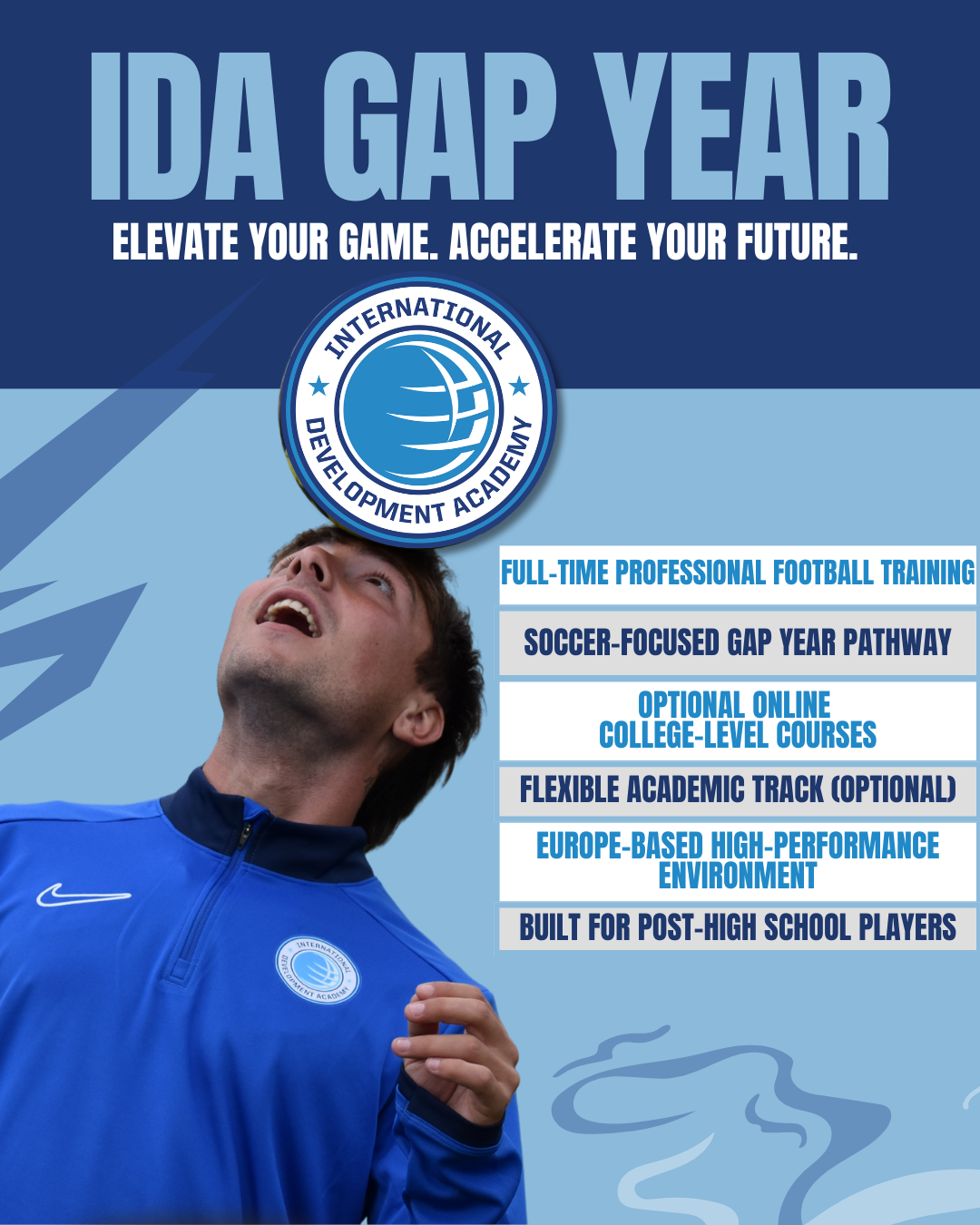
The IDA Gap Year is built for players who want to prepare — not pause.
Through structured daily training, competitive environments, international exposure, and optional academic pathways aligned with U.S. college requirements, players use this year to arrive at college ready, not rushed.
The Takeaway
College soccer hasn’t closed its doors.
It’s simply asking players to walk in prepared.
A Pathway That Opens Doors
At IDA, we believe that talent grows when opportunity, structure, and belief come together.
When players are placed in a professional environment that challenges them daily — on the field, off the field, and mentally — pathways begin to open.
This month, G’vani Rojas, an IDA Valencia player, took a major step along that pathway by accepting a full scholarship to Indian Hills Community College (Iowa, USA) — currently ranked the #1 Junior College program in the country and reigning national champions.
His move to the United States will take place on February 16, allowing him to join the team for spring preseason, where Indian Hills will face top NCAA Division I programs. It’s an opportunity that reflects not only his individual commitment and work ethic, but also the environment and support system that helped him get there.
Building the Pathway: IDA as the Starting Point
G’vani’s journey is a clear example of how the IDA pathway is designed to work.
He began at IDA Valencia, where daily exposure to a professional training structure allowed him to develop consistency, discipline, and game understanding. From there, he progressed into competitive Spanish football environments with CD Teruel and UD Vall de Uxó, gaining real match experience against high-level opposition — all while keeping long-term academic opportunities in sight.
IDA Valencia ➡️ CD Teruel ➡️ UD Vall de Uxó ➡️ Indian Hills Community College
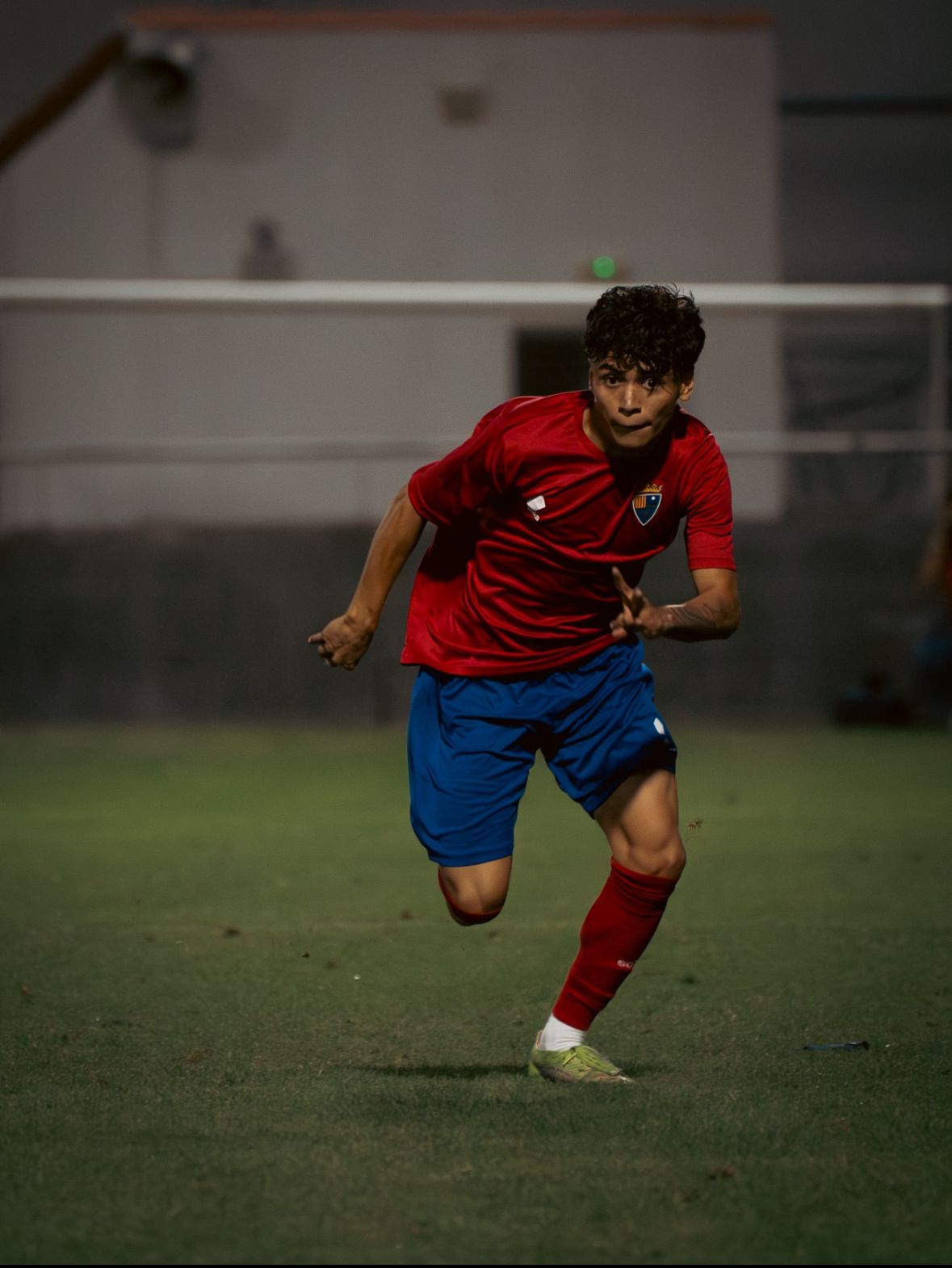
Looking back, one moment stands out as a turning point.
“Making my debut with CD Teruel this season was huge for me,” G’vani says.
“Playing against Levante UD’s first team — a club currently competing in La Liga — really showed me how far I’d come.”
That moment wasn’t accidental. It was the result of preparation, exposure, and trust in a process that places players in environments where growth is demanded.
Just as important, however, were the human connections built along the way.
“Beyond football, the friendships I’ve built have been just as meaningful to my journey.”
Choosing a Pathway That Keeps Doors Open
From the start, G’vani understood the value of combining football ambition with education — a core principle of the IDA model.
That mindset was shaped by mentorship and experience.
“A very important mentor in my life, my football psychology coach Rodrigo, played a big role in this decision. He chose the college route himself after growing up at Villarreal, and he always told me it was one of the best decisions he ever made.”
Seeing that professional football opportunities still existed beyond college reinforced G’vani’s belief in the pathway.
“Becoming a professional player is still my goal. This pathway gives me the best balance between football and education.”
The IDA Environment: Preparation Beyond the Game
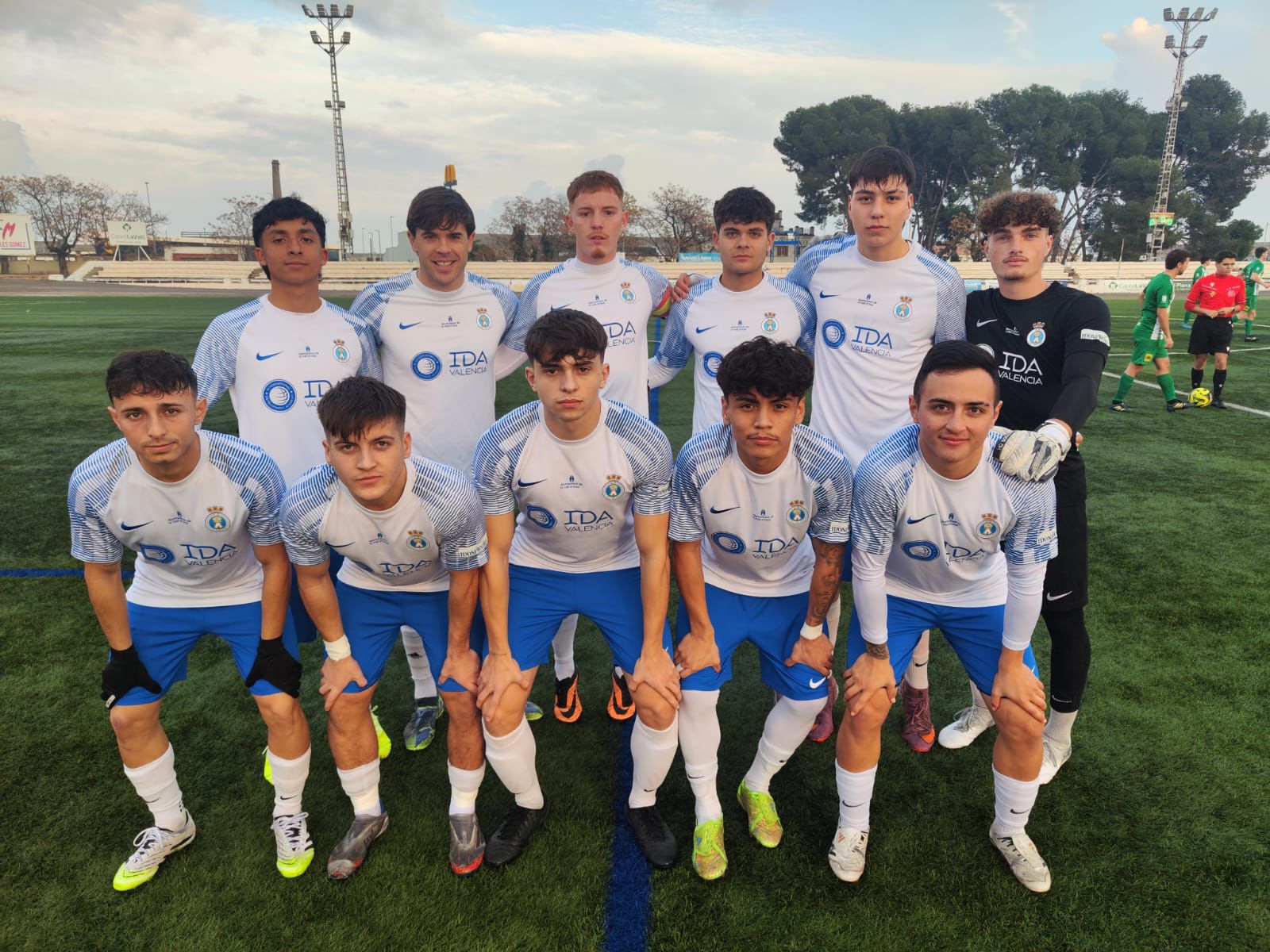
For G’vani, IDA was not simply a place to train — it was a place that demanded accountability and professionalism from day one.
“IDA played a huge role in my development, both as a player and as a person,” he explains.
“If you put in the work and earn it, IDA gives you real opportunities to compete and prove yourself.”
Arriving at IDA at a young age accelerated his personal growth.
“It helped me mature much faster. I had to take responsibility for myself early on, and that shaped who I am today.”
What truly prepared him for the next level, however, was the daily professional structure.
“The professionalism at IDA was key. The daily schedule — training, gym, recovery, workload — was very similar to my preseason schedule at CD Teruel, who compete in Primera RFEF.”
That alignment between development and real-world football environments is intentional.
“It helped me understand what it takes to perform consistently in a professional setting.”
Turning Opportunity into Reality: The Scholarship
IDA’s role doesn’t end on the pitch — it extends into guidance, exposure, and empowering players to take ownership of their next steps.
G’vani earned his opportunity at Indian Hills by being proactive and prepared.
“I reached out directly to the head coach, Zach Newton. I sent my CV, highlights, and a detailed email introducing myself.”
Supported by his development and experience within the IDA pathway, he took an official visit, observed the team environment, and demonstrated his readiness.
“Receiving a full scholarship meant a lot to me. I’m extremely grateful for the opportunity, and excited to prove myself.”
Joining the top-ranked junior college program in the country is a challenge he welcomes.
“What excites me most is the chance to add to the program’s history. I want to compete at the highest level and help the team win another national championship.”
Advice for Current IDA Players and Families
For players currently within the IDA environment — and for families considering this pathway — G’vani’s message is clear.
“Be proactive. Stay on top of the recruiting process, communicate with coaches, and keep them updated.”
“Consistency, communication, and patience are key.”
When asked to describe this moment in his journey, his response reflects both gratitude and clarity.
“I feel truly blessed. A big thank you to Jordi for all his support, and to my family for always believing in me and my decisions.”
Where Potential Meets Opportunity
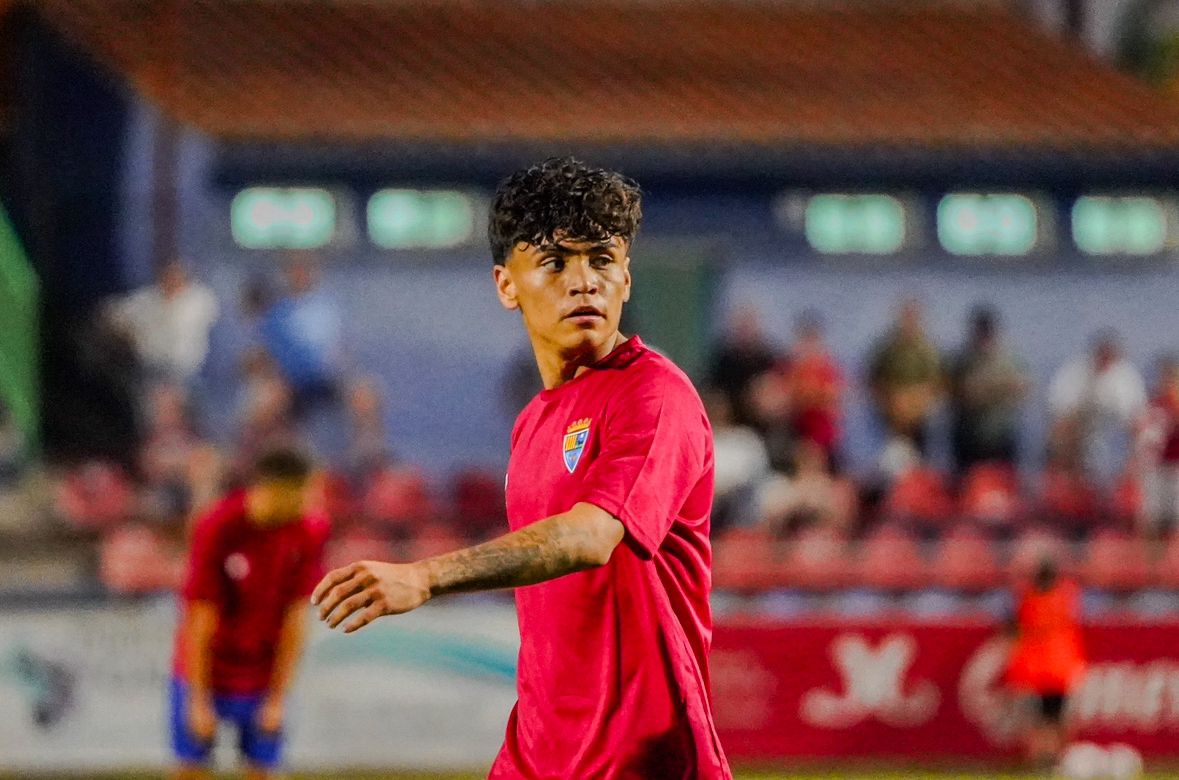
G’vani Rojas’ story is a powerful example of what can happen when a player is placed in the right environment — one that challenges, supports, and prepares them for what comes next.
At IDA, the goal is not to promise outcomes, but to build pathways, provide structure, and empower players to turn ambition into real opportunity.
For many families and players reading this, the takeaway is simple:
with the right environment, the next step is always possible.
Introducing a New Pre-Collegiate Option for Student-Athletes
At International Development Academy (IDA), we are constantly evolving our ecosystem to better support the long-term academic and athletic goals of our student-athletes. As part of this commitment, IDA is expanding its academic offerings through a new optional Pre-Collegiate pathway, made available in partnership with TPH Academy.
This new option allows eligible IDA athletes to access authentic, accredited U.S. college-level online coursework while continuing to train full-time in a professional football environment — as an add-on to IDA’s core Study, Train, Play experience.
What Is the Pre-Collegiate Pathway?
Through this pathway, students may enroll in:
-
College-level online courses
-
Taught by certified professors
-
Delivered by regionally accredited U.S. colleges and universities
How This Fits Within IDA’s Academic Model
Key structure points:
-
Courses are fully asynchronous
-
Students complete coursework independently
-
Academic instruction, pacing, and evaluation are managed directly by the partner institution
Who Is This Option Designed For?
-
Gap year athletes seeking to remain academically engaged
-
International students bridging into the U.S. academic system
-
Student-athletes planning for NCAA or university pathways
-
Players looking to earn college credit while training abroad
Important Academic Considerations
-
Courses are fully accredited college-level offerings
-
Credit transferability is determined solely by the receiving institution
-
NCAA eligibility decisions are made by the receiving institution and its compliance office
-
Neither IDA nor its partners can guarantee transfer or eligibility outcomes
Partner Institutions
How Families Can Learn More
If the Pre-Collegiate pathway aligns with a student’s academic and athletic goals, families will then be introduced directly to IDA’s academic partner team for detailed guidance and next steps.
An Expanded Academic Ecosystem at IDA
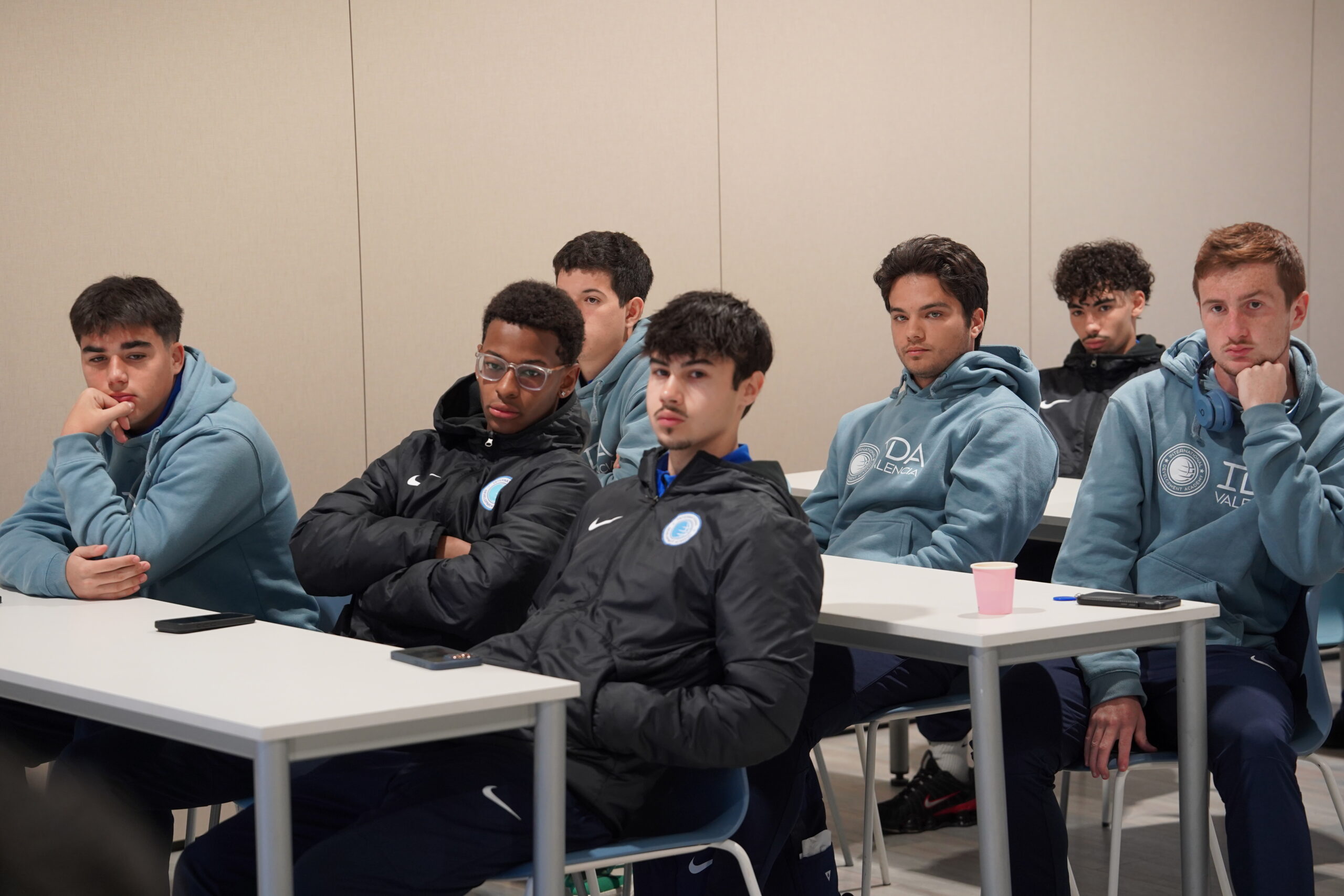
This option reinforces IDA’s commitment to supporting student-athletes not only in their football development, but also in building a clear, informed academic pathway for the future.
At International Development Academy (IDA), international competition is a key pillar of long-term player development. Our partnership with Global Sports Experiences (GSE) and Medeama Sporting Club continues to create meaningful opportunities for players to test themselves on the global stage — and the results speak for themselves.
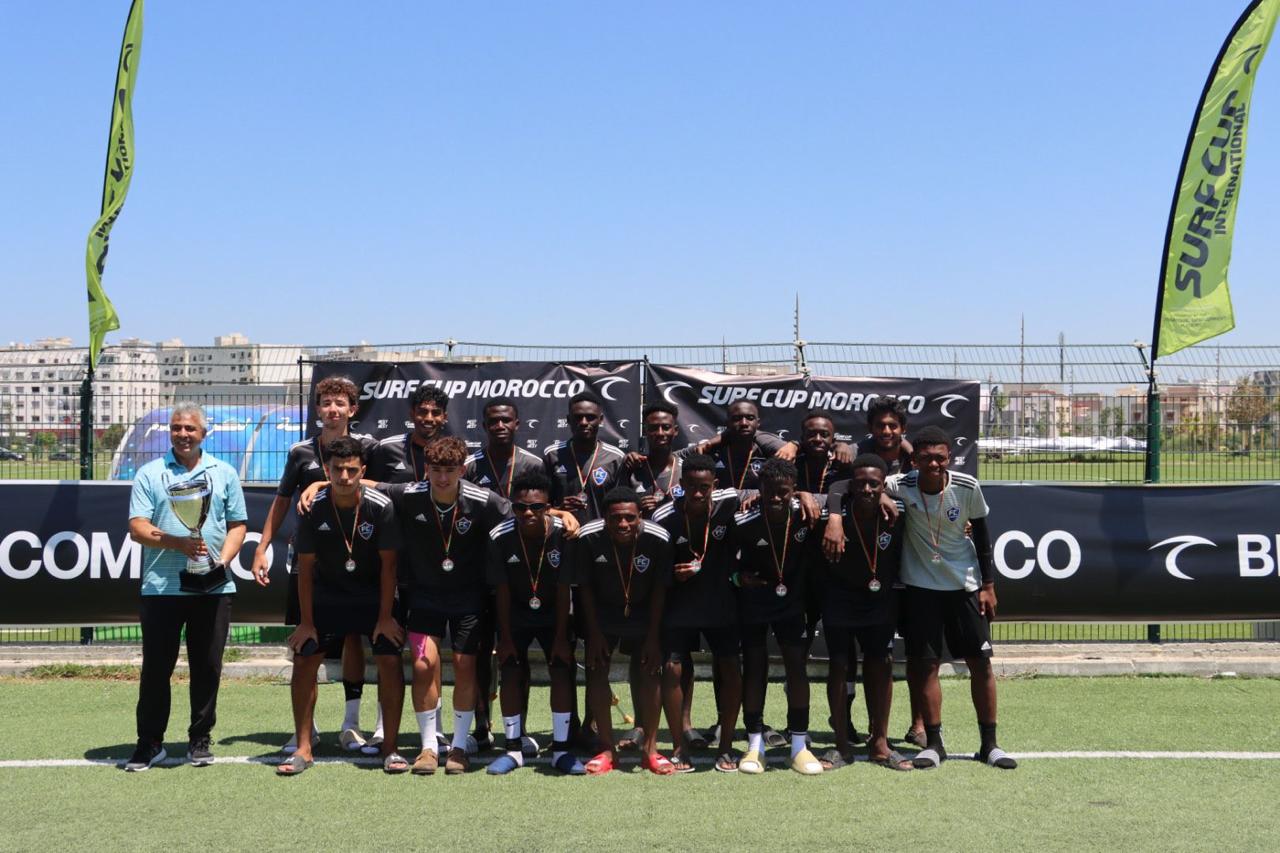
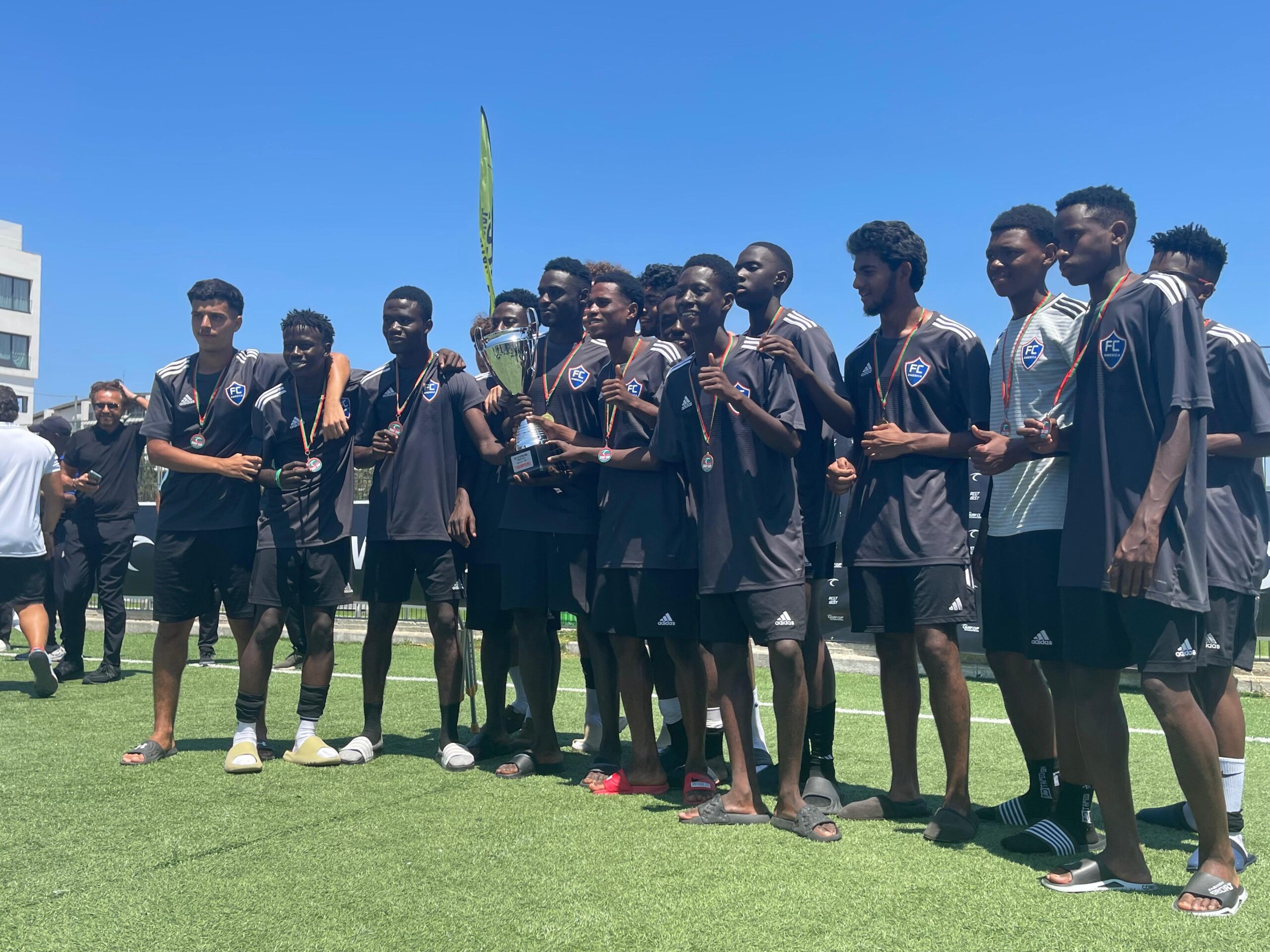
That vision came to life at Surf Cup International Morocco 2024, where four Medeama players joined the FC United program. Competing against elite opposition from across Europe, Africa, and beyond, the FC United squad made history by becoming the first-ever U19 champions of Surf Cup International Morocco.
Among that title-winning group were Kelvin Nkrumah and David Boison Frimpong — two players whose journeys since the tournament highlight how structured international experiences accelerate growth both on and off the pitch.
Kelvin Nkrumah: From Development Platform to National Team Stage
Following a standout summer with FC United in Morocco, Kelvin Nkrumah has continued his upward development curve. Back in Ghana, he has become a regular presence in Medeama SC’s first team, contributing consistently in top-level domestic competition.
As Medeama SC push for the Ghanaian Premier League title, Kelvin has played an important role despite his young age. His progress has also been recognised internationally, earning multiple call-ups to the Ghana U20 national team.
In November 2025, at just 18 years old, Kelvin reached another major milestone with his first senior Ghana national team call-up — a reflection of both his ability and the growth gained through high-level international competition.
Kelvin’s development embodies IDA’s philosophy: creating environments that challenge players, expose them to new standards, and prepare them for the demands of the professional game.
David Boison Frimpong: Translating Development Into European Performance
Another standout from the same FC United group is David Boison Frimpong, whose pathway has now taken him into European football.
During the 2025 summer transfer window, David joined FC Copenhagen on loan, integrating into the Danish champions’ U19 setup. Since arriving, he has featured consistently in both the Danish U19 league and the UEFA Youth League, making an immediate impact.
With 7 goals in 15 appearances, David’s performances highlight his adaptability, tactical growth, and readiness for elite-level competition.
The FC United 2014 Boys competed alongside more than 220 teams from 31 countries, gaining exposure to elite international opposition in a high-level tournament environment designed to challenge players both on and off the pitch.
What Is FC United?
Designed as a next-step opportunity beyond the training environment, FC United brings together top players from different countries to compete in elite international tournaments.
Rather than operating as a standalone team, FC United functions as a pathway outcome – giving players real-world exposure to international competition, mixed-nationality squads, and diverse football cultures.
Powered by the same coaching, recruitment, and operational structure behind IDA’s international programs, FC United allows players to test their development in high-performance environments where adaptability, resilience, and growth through challenge are essential.
A Key Moment in the IDA Pathway
While IDA focuses on daily training, individual development, and long-term progression, FC United provides the next step: testing those principles in unfamiliar environments, against diverse playing styles, and under tournament pressure.
Rather than operating as a standalone team, FC United is positioned as a pathway outcome – a bridge between the training ground and the global game.
A Truly International Squad
Bringing together players from different footballing cultures and backgrounds is a core element of the FC United model. Once in Spain, the group was required to quickly adapt – communicating effectively, understanding new teammates, and performing collectively in a competitive setting.
“It was fun to be on a team and hang out with players from around the world,” said Sully, FC United goalkeeper. “I really liked playing against Everton. It was cool to play a pro academy.”
 This international mix reflects IDA’s belief that exposure to diversity accelerates development, helping players grow not only as footballers, but as individuals.
Competing on a Global Stage
Each match presented unique tactical and physical challenges, demanding flexibility and resilience from the players. Adapting to different game rhythms, playing styles, and competitive standards is a central component of international player development.
Following the group phase, FC United narrowly missed further progression after a closely contested Silver Quarter Final against Kyalami United (South Africa). While results are always part of competition, the experience provided valuable lessons in teamwork, composure, and performance under pressure.
From a parent perspective, the growth was clear.
“My son truly embraced a new experience in a foreign country with players from all over the world,” said Nik, father of Sully. “He grew immensely in confidence as a player and, most importantly, as a person during our time in Spain at SCI Salou.”
The Surf Cup International Environment
Now in its fifth edition, Surf Cup International Salou has established itself as one of Europe’s most respected youth tournaments. With teams representing six continents, the event offers a unique global setting where players are challenged beyond domestic competition.
For many families, the environment highlights the standards required at the international level.
“After the tournament, and the talent we saw on display, Muhammad decided that he has to do a lot more to keep up with the level of the rest of the continents,” shared Sheriff, Muhammad’s father, from South Africa.
More Than a Tournament Experience
For IDA, participation in events like Surf Cup International Salou goes beyond match results.
Playing in mixed-nationality squads, competing against elite international academies, and experiencing different football cultures are defining elements of the development pathway. These experiences foster independence, confidence, and cultural awareness – qualities that extend far beyond the pitch.
Programs like FC United, delivered in collaboration with Global Sports Experiences (GSE), reflect IDA’s commitment to preparing players for the realities of the global game.
As the pathway continues to evolve, FC United remains a key step for players ready to test themselves on the international stage.
We look forward to building on this experience in 2026.
The Moment the Game Gets Bigger
There is a moment that changes how a young athlete sees the world.
It’s not a trophy.
It’s not a new pair of boots.
It’s the first time they realize the game is bigger than their usual field.
For many players, that moment happens far from home.
Why Experiences Stay Longer Than Things
More and more families are choosing to invest in experiences rather than possessions. Not because experiences are easier or more comfortable – but because they shape perspective.
Things fade.
Experiences stay.
In sport, this is even more true. Training is essential, but development rarely happens only where everything feels familiar. Growth often begins when routines disappear and players are asked to adapt.
International experiences do exactly that.
What Changes When the Environment Changes
Playing abroad means new teammates, new opponents, different styles, different rhythms. It means not understanding everything right away.
Players have to listen more.
Observe more.
Adjust faster.
They learn how to communicate without words. How to stay composed when the game feels unfamiliar. How to compete without relying on habits built at home.
These moments force growth – not because they are comfortable, but because they aren’t.
The Lessons Players Don’t Forget
Ask players what they remember most from international trips, and it’s rarely a scoreline.
They remember exploring a new city.
They remember sharing a locker room with teammates from different countries.
They remember moments when they struggled – and realized they could handle it.
Those experiences shape confidence, independence, and resilience. They change how players see challenges long after the trip is over.
This is why experiences matter.
When Development Is Seen as a Journey
At International Development Academy (IDA), development has always been viewed as a long-term journey, not a checklist.
Training builds the foundation.
Experiences test it.
International exposure, when used thoughtfully, becomes a way for players to apply what they’ve learned in real-world environments — where adaptation, decision-making, and emotional control matter as much as technique.
That philosophy is what allows development to continue beyond the training ground.
International experiences are most powerful when they are part of a long-term development journey – where training provides the foundation and global exposure provides the test.
From Philosophy to Pathway
Within the IDA pathway, international experiences are introduced as a natural next step – a chance for players to take what they’ve learned and test it in new environments.
Within that approach, programs like FC United exist as a natural next step.
FC United brings players together from different countries to form mixed-nationality teams that compete in elite international tournaments. Players meet, connect, and learn on the move – adapting to new teammates, new opponents, and new ways of playing.
It’s not only about showcasing talent. It’s about experience. And about learning what the game feels like when it gets bigger.
A Living Example
That idea came to life last month when FC United competed at Surf Cup International Salou, one of Global Sports Experiences‘ and Europe’s leading youth tournaments.
Facing teams from across the globe, players encountered new playing styles, new expectations, and new challenges every day. The experience demanded adaptability – and rewarded growth.
It was a reminder of what international experiences can offer when they are part of a broader developmental journey.
Why This Matters
Not every athlete needs to travel internationally at every stage. But for those who are ready, these experiences can become turning points.
They don’t just develop better players.
They help develop more prepared people.
Because in the end, the most valuable thing a family or a program can offer a young athlete isn’t comfort.
It’s perspective.